Best Flooring for Kitchens: 2026 Buyer’s Guide
Choosing the best flooring for kitchens is one of the most important design decisions homeowners make. Kitchens see more traffic, spills, heat, and daily wear than any other room in the house. From rushed weekday breakfasts to weekend cooking marathons, your kitchen floor has to balance durability, comfort, style, and long-term value.
Luxury vinyl, laminate, tile, solid hardwood, and engineered hardwood all offer strong benefits, but no single option is perfect for every household. The right choice depends on how you live, how much maintenance you want, and what kind of performance you expect over time.
Quick Take
The best flooring for kitchens depends on lifestyle, not trends alone. Luxury vinyl delivers water-ready performance and comfort underfoot. Laminate offers hardwood-inspired style at a lower cost. Tile provides unmatched durability and moisture resistance. Solid hardwood brings classic warmth with added care requirements, while engineered hardwood strikes a balance between real-wood beauty and improved stability.
In 2026, wide planks, stone visuals, matte finishes, and sustainability continue to shape kitchen flooring design.
Why Choosing Kitchen Flooring Feels Tricky
No room works harder than the kitchen. Coffee spills, kids running in for snacks, chairs scraping across the floor, and the occasional dropped pan all put flooring to the test.
If you’ve searched online, you’ve probably seen conflicting advice. Some experts insist tile is the only safe option. Others praise luxury vinyl as the modern solution. Hardwood remains beautiful but controversial in moisture-prone spaces.
That’s why understanding how each material performs in real kitchens—not just showrooms—is the key to choosing the best flooring for kitchens that truly fits your life.
What to Consider Before You Choose
When evaluating the best flooring for kitchens, focus on these essential factors:
Comfort: Standing for long periods while cooking matters more than you think.
Style: Matte finishes and natural textures dominate kitchen design in 2026.
Resale Appeal: Hardwood and tile continue to attract buyers.
Cost: Vinyl and laminate are budget-friendly; hardwood and tile cost more.
Durability: Can it handle chairs, pets, and daily traffic?
Moisture Resistance: Kitchens mean spills, splashes, and humidity.
Maintenance: Some floors wipe clean easily; others need sealing or refinishing.
Luxury Vinyl Flooring
Luxury vinyl has become a top contender in conversations about the best flooring for kitchens—and for good reason. It’s waterproof at the surface, quiet underfoot, and easy to clean.
Spilled pasta sauce or dropped juice is no cause for panic. As long as puddles aren’t left sitting at seams, vinyl handles everyday messes with ease.
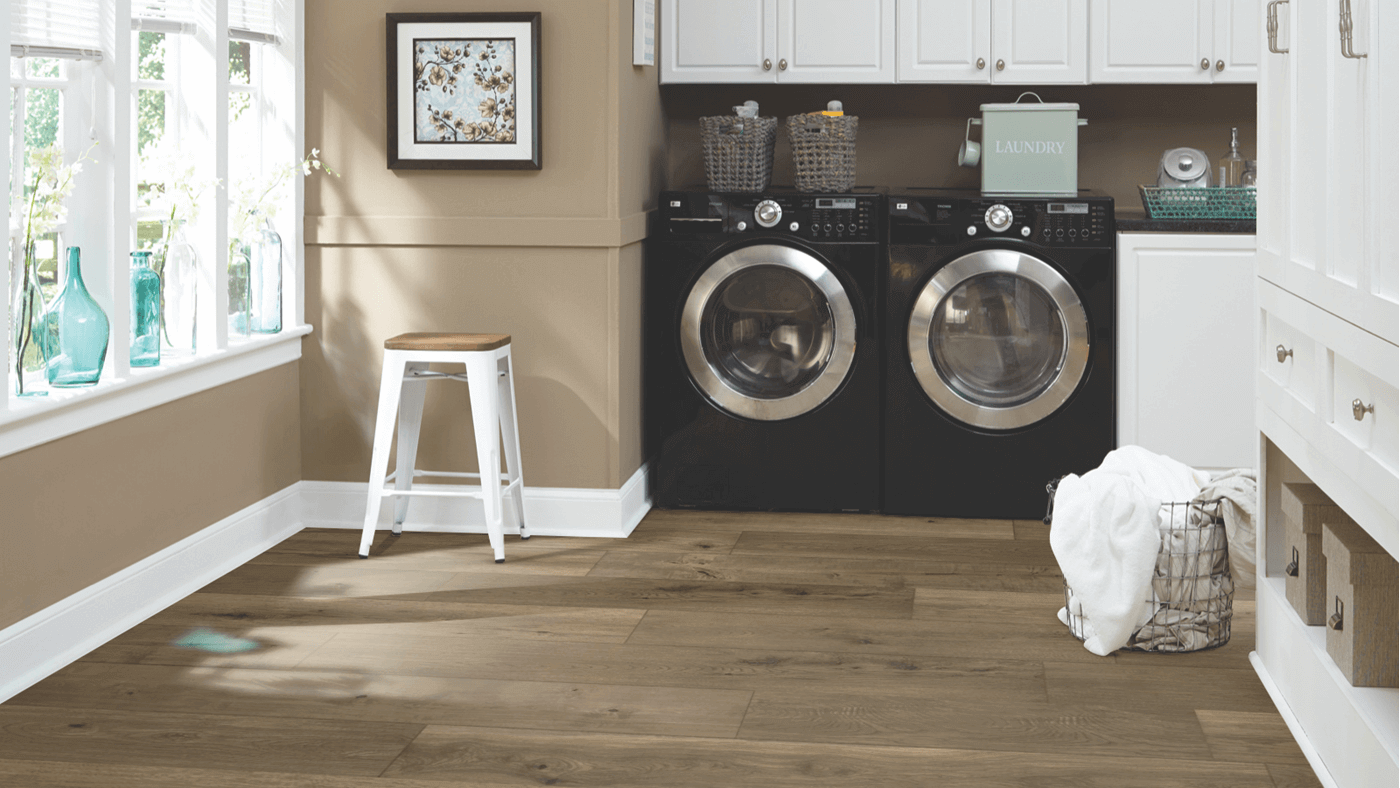
Mannington Adura Max Gala Orchard delivers the type of performance many homeowners look for when choosing kitchen flooring. This luxury vinyl plank features a waterproof core along with strong scratch and stain resistance, making it well suited for busy kitchens that see frequent spills, foot traffic, and daily wear. Its realistic wood visual adds warmth while maintaining the easy cleanup and moisture tolerance that make luxury vinyl a practical kitchen choice.
Why homeowners love it:
Luxury vinyl is softer than tile, easier on joints, and quieter during busy meal prep. It offers an enormous design range, from warm oak visuals to modern concrete tones.
2026 trend watch:
Wide, matte-finish planks that flow seamlessly into living spaces for an open, connected feel.
Laminate Flooring
Laminate is the hardwood-look alternative that’s stronger and more realistic than ever. Today’s designs rival real wood visually while offering improved durability.
Imagine a kitchen where chairs slide daily, kids run in for snacks, and the floor still looks great thanks to laminate’s tough wear layer.
Water performance:
Traditional laminate struggled with moisture, but modern options like Mohawk RevWood and Mannington Restoration resist standing water for 24–72 hours.
Best fit:
Homeowners who want hardwood style on a budget and can commit to prompt spill cleanup.
2026 trend watch:
Eco-conscious, low-VOC laminates as sustainability becomes a top priority.
Tile Flooring (Porcelain & Ceramic)
Tile is the kitchen classic that thrives in chaos. Boiling water splashes, melting ice, and muddy shoes don’t faze it.
Strengths:
Tile offers unmatched durability and moisture resistance. It’s ideal for high-traffic kitchens and long-term ownership.
Trade-offs:
Tile is cold and hard underfoot. Anti-fatigue mats help, especially for frequent cooks. While tile lasts decades, individual tiles can crack from heavy impacts.
2026 trend watch:
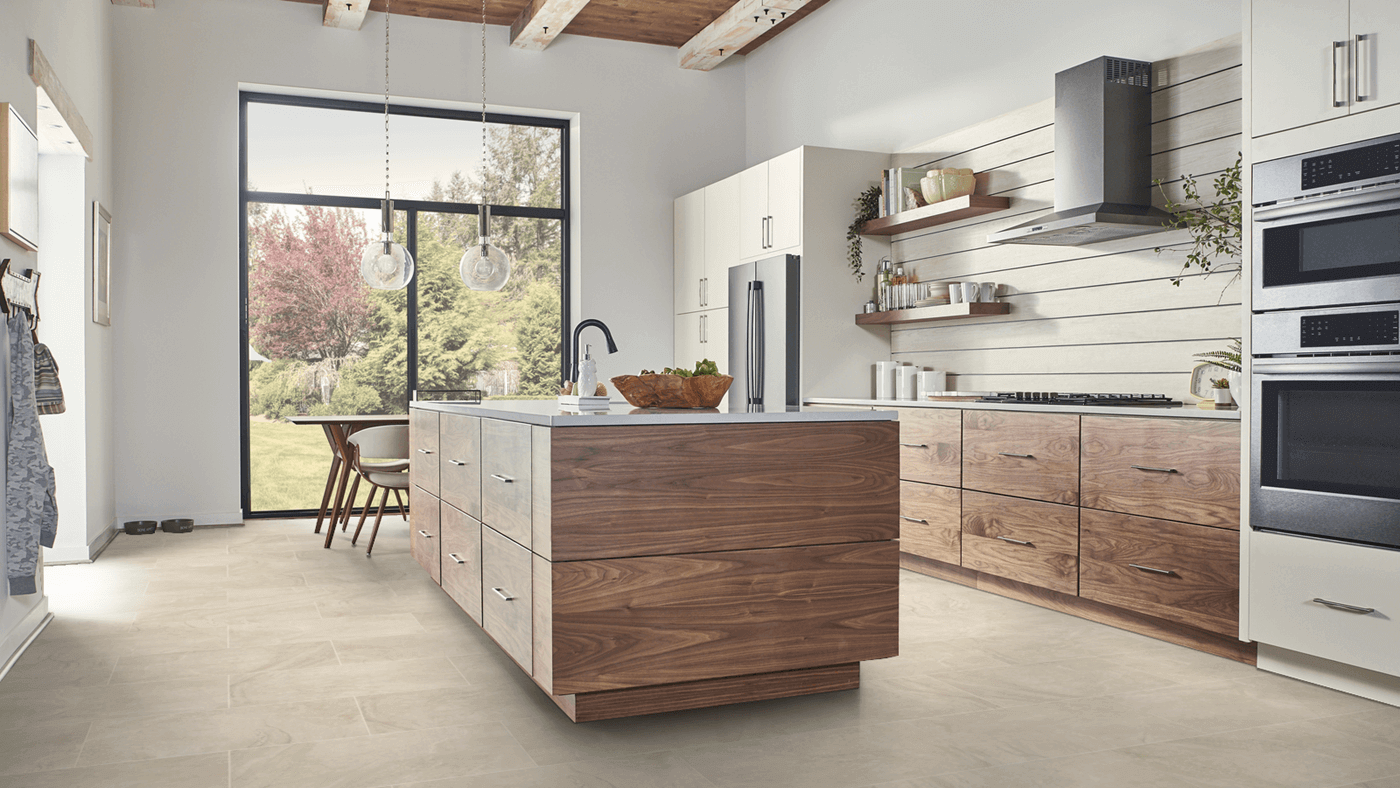
Large-format tiles with minimal grout
Stone looks like slate, travertine, and marble
Bold geometric and encaustic-inspired patterns
Solid Hardwood Flooring
Few materials warm a kitchen like real hardwood. It’s timeless, natural, and elevates the entire home.
Pros:
Can be refinished multiple times
Adds strong resale value
Cons:
Sensitive to moisture
More prone to scratches without protection
2026 trend watch:
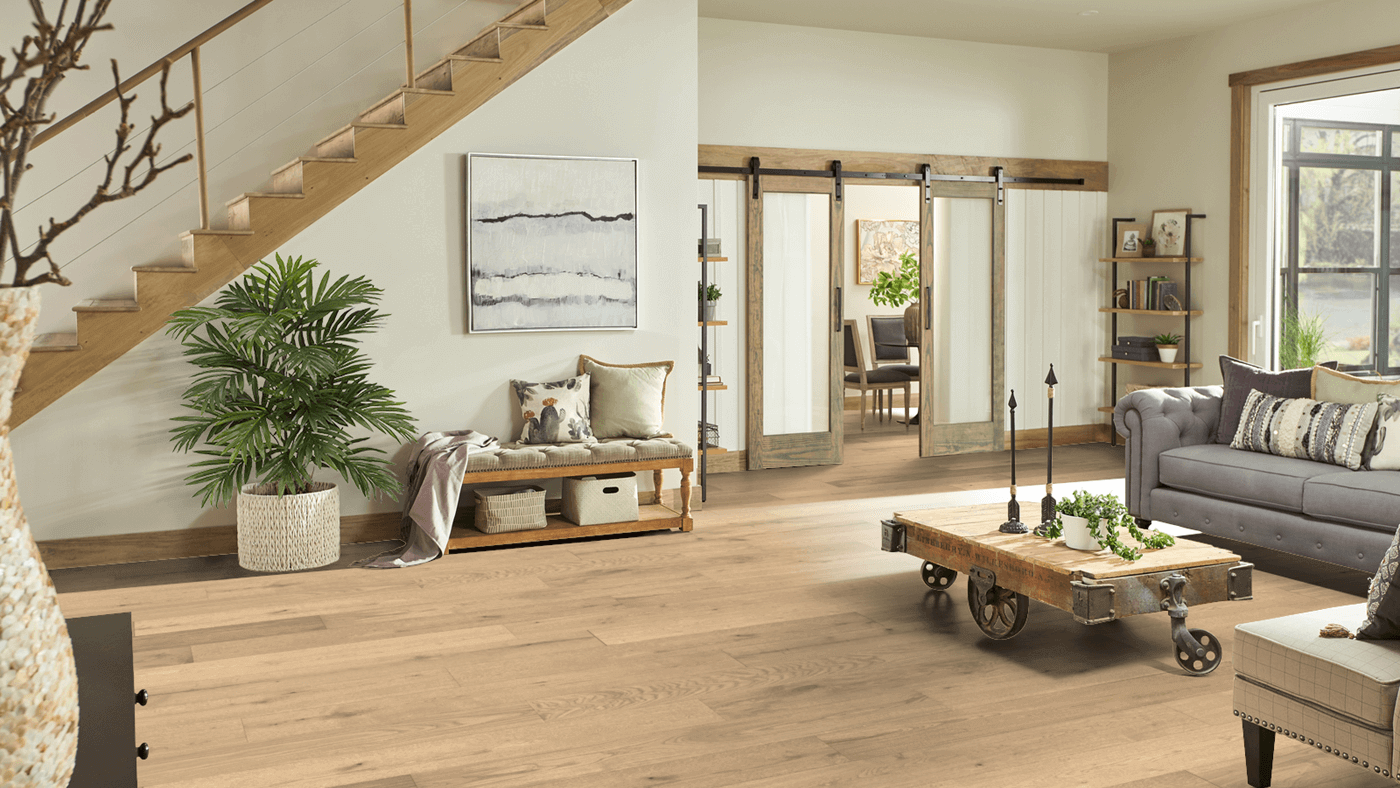
White oak in matte finishes with neutral, natural tones.
Engineered Hardwood Flooring
Engineered hardwood offers the beauty of real wood with better dimensional stability for kitchens.
Its layered core handles humidity more gracefully than solid wood, and many modern options include sealed edges for extra spill protection.
Where it shines:
Looks identical to solid hardwood but performs better in active kitchens.
Limitations:
Not waterproof, and refinishing is usually limited to once or twice.
2026 trend watch:
Wide planks with matte finishes.
2026 Kitchen Flooring Trends
The best flooring for kitchens in 2026 blends durability with character:
Wide planks for open, modern spaces
Stone and stone-look tile for natural texture
Matte finishes for realism
Patterned tile for bold design statements
Warm neutrals replacing cooler grays
Sustainability with FSC-certified woods and low-emission products
Technology like waterproof laminates and water-tolerant engineered wood
How They Handle Water — and Warranties
Water resistance buys time, not immunity.
Vinyl: Handles daily spills, not long-term flooding
Laminate: Short-term protection only
Hardwood: Moisture excluded from finish warranties
Tile: Tile is covered; grout maintenance is homeowner responsibility
Major leaks are typically insurance matters, not warranty claims.
Cost Comparison
| Feature | Luxury Vinyl | Laminate | Tile | Solid Hardwood | Engineered Hardwood |
|---|---|---|---|---|---|
| Durability | Excellent | Excellent | Excellent | Fair–Good | Good |
| Moisture Resistance | Excellent (edges vulnerable) | Excellent (edges vulnerable) | Excellent | Poor | Better than solid |
| Comfort | Soft, quiet | Firm, slightly hollow | Cold, hard | Warm, firm | Warm, firm |
| Style Variety | Huge | Strong wood visuals | Endless | Classic | Classic |
| Resale Appeal | Moderate | Moderate | Strong | Strong | Strong |
| Cost Range | Budget–Mid | Budget–Mid | Premium | High–Premium | Mid–High |
Which Floor Is Right for Your Kitchen?
The best flooring for kitchens comes down to how you live. Luxury vinyl is the most forgiving. Laminate delivers style on a budget. Tile lasts forever. Solid hardwood adds timeless charm. Engineered hardwood bridges beauty and practicality.
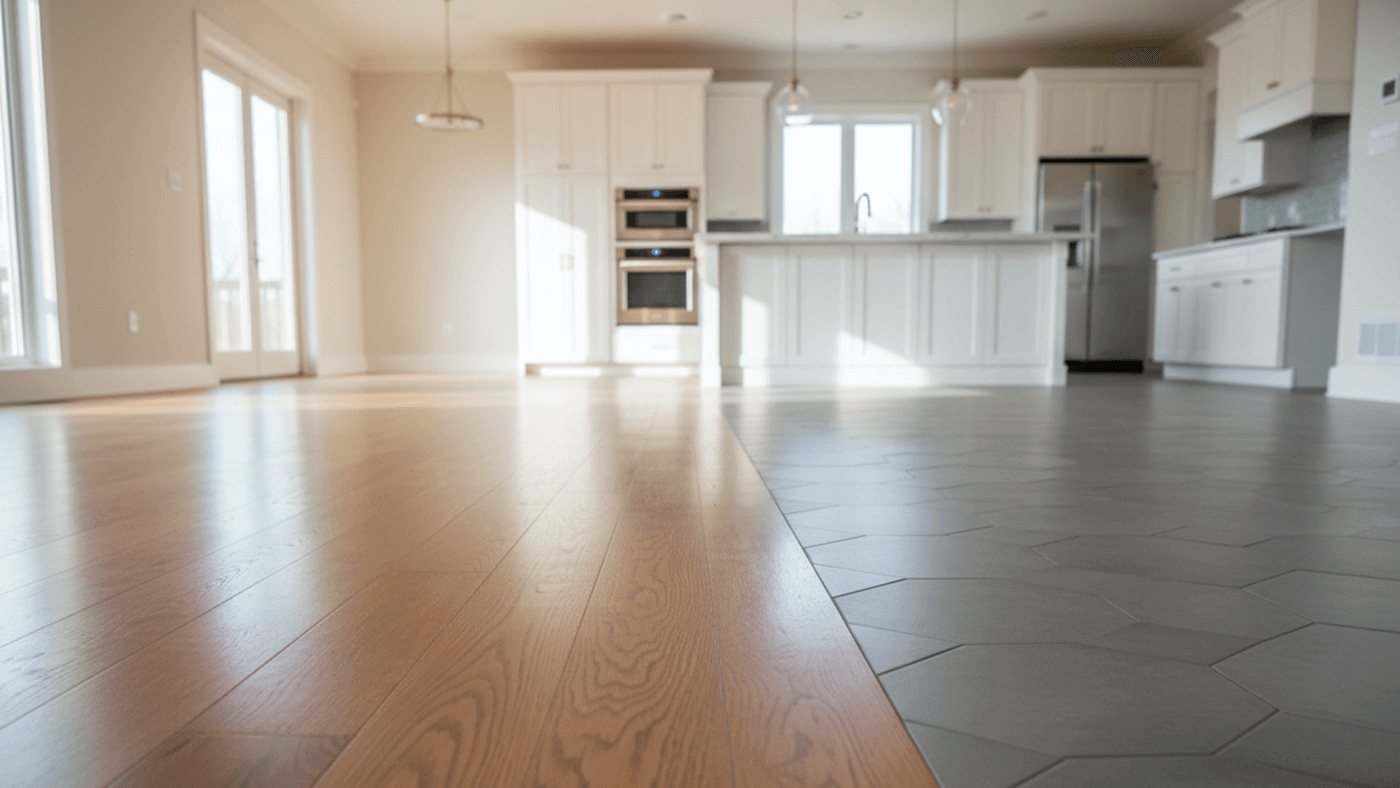
Many homeowners combine materials—hardwood in dining areas, vinyl or tile in work zones—for the best balance of style and function.
Final Thoughts
There’s no universal winner when choosing the best flooring for kitchens in 2026. The right floor supports your daily routine, complements your design style, and fits your long-term plans.
Ordering samples, comparing textures, and imagining how your family moves through the space is the best way to decide. And when you’re ready, the Flooring Market team is here to help you choose with confidence.