Table of Contents
- Matching Existing Flooring: What to Know Before Replacing or Repairing
- Why Matching Existing Flooring Can Be Difficult
- Factors That Affect How Well Floors Can Be Matched
- Matching Hardwood Flooring
- Matching Tile Flooring
- Matching Luxury Vinyl and Laminate Flooring
- What to Do When an Exact Match Isn’t Possible
- Setting Realistic Expectations
- When Professional Help Is Worth It
- Final Thoughts
- FAQs
Matching Existing Flooring: What to Know Before Replacing or Repairing
Replacing or repairing a section of flooring while keeping the original look intact can feel overwhelming. Many homeowners worry that new material will stand out, clash with surrounding floors, or make the repair obvious the moment you walk into the room. While matching existing flooring is not always simple, it is often achievable with the right approach, realistic expectations, and an understanding of how floors change over time.
Whether you are repairing a small damaged area or blending new flooring into an existing space, success depends on several factors including the type of flooring, how long it has been installed, and whether the original materials are still available. Knowing what to expect before starting the project can help you avoid unnecessary frustration and costly mistakes.
Why Matching Existing Flooring Can Be Difficult
Even when homeowners know exactly what product was originally installed, floors rarely look the same years later. Sunlight, daily foot traffic, furniture movement, and cleaning products all contribute to gradual changes in color, texture, and sheen. These changes happen slowly, which is why they often go unnoticed until a repair becomes necessary.
Matching existing flooring is not just about finding the same brand or color name. It also requires accounting for how the floor has aged. New flooring typically looks cleaner, brighter, and more uniform than older material. Over time, these differences may soften, but they are almost always noticeable at first.
Factors That Affect How Well Floors Can Be Matched
Several important factors influence how seamlessly new flooring can blend with old.
Material Type and Availability
Some flooring materials offer better matching potential than others. Solid hardwood is generally the most forgiving because it can be sanded and refinished. Laminate and luxury vinyl are more difficult to match because manufacturers frequently discontinue styles, patterns, and locking systems.
Older or specialty flooring products may no longer be available at all. Even if the same product name still exists, the construction or finish may have changed slightly over time.
Age and Wear
Floors naturally change with use. Wood darkens or lightens depending on sunlight exposure, while high-traffic areas show more wear. Tile surfaces may dull, and grout can discolor. Even if you locate the same flooring product, it may not match perfectly due to differences in wear.
Finish and Sheen
Wood floors may have been refinished one or more times, altering both color and sheen. Matching an aged finish requires testing stains and topcoats to achieve the closest possible result. Tile finishes can also vary slightly between production runs.
Plank Size, Thickness, and Pattern
Flooring dimensions evolve as trends change. A plank width that was common ten years ago may no longer be produced. Pattern repetition in laminate and vinyl can also make mismatched areas more noticeable if alignment is off.
Understanding these factors helps set realistic expectations and leads to better outcomes when matching existing flooring.
Quick Matching Difficulty by Flooring Type
| Flooring Type | Match Difficulty | Why It’s Challenging | Best Solution |
|---|---|---|---|
| Hardwood | Moderate | Color aging, finish differences | Sand & refinish for uniform look |
| Tile | High | Discontinued styles, grout variation | Use complementary tile or borders |
| Luxury Vinyl (LVP) | High | Pattern repeat, discontinued products | Use transitions or replace sections |
| Laminate | High | Locking systems + discontinued designs | Replace room or use transition breaks |
Matching Hardwood Flooring
Hardwood offers the highest likelihood of a successful match, though some variation should always be expected.
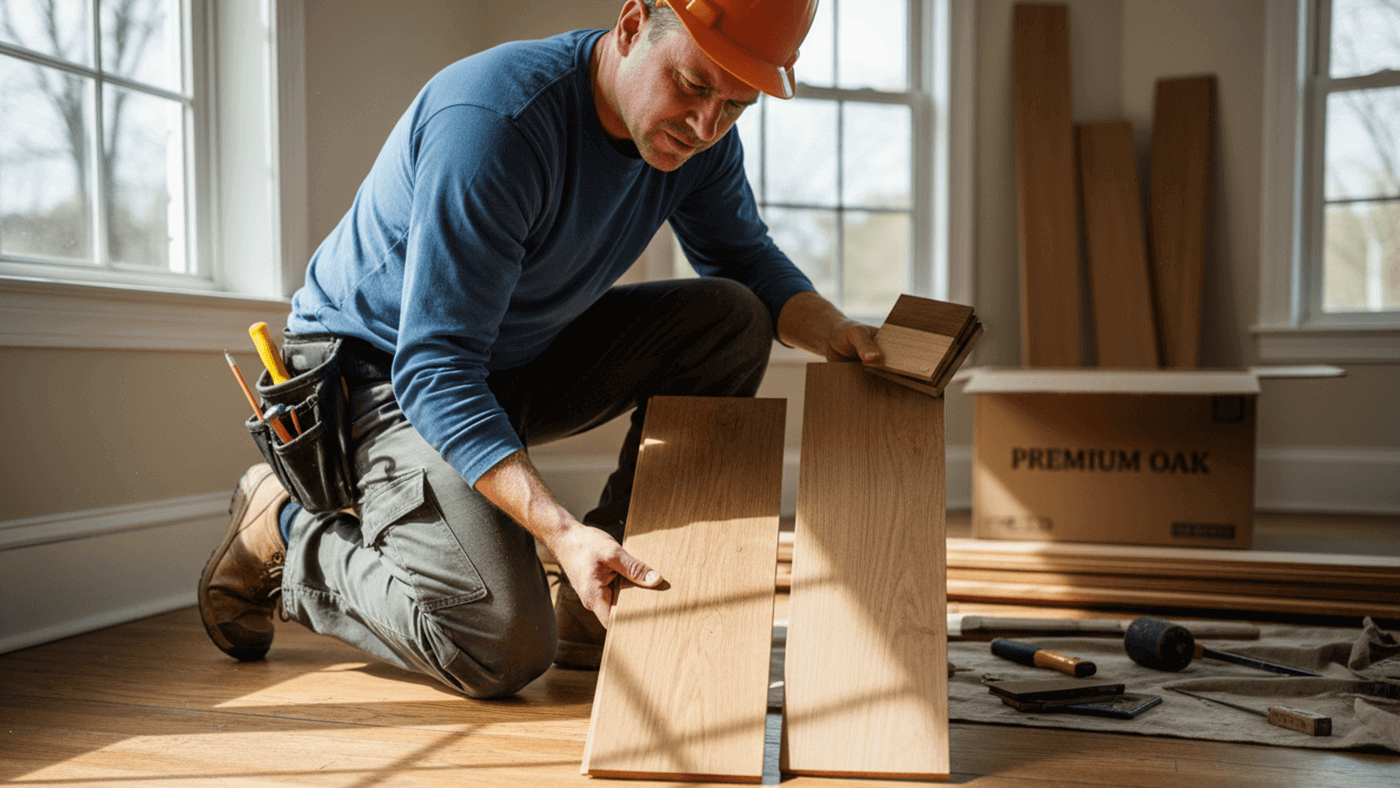
To improve results, start by identifying the wood species, such as oak, maple, hickory, or walnut. Next, measure plank width, thickness, and edge profile. If the original manufacturer still produces the same line, sourcing replacement boards may be possible.
If matching planks cannot be found, custom milling may be an option. In many cases, sanding and refinishing the entire floor creates the most seamless appearance by blending old and new boards together under a single finish.
Hardwood repairs are often the most flexible option, but they also require the most skill and planning to achieve consistent results.
Matching Tile Flooring
Tile is one of the most challenging materials to match, especially in older homes.
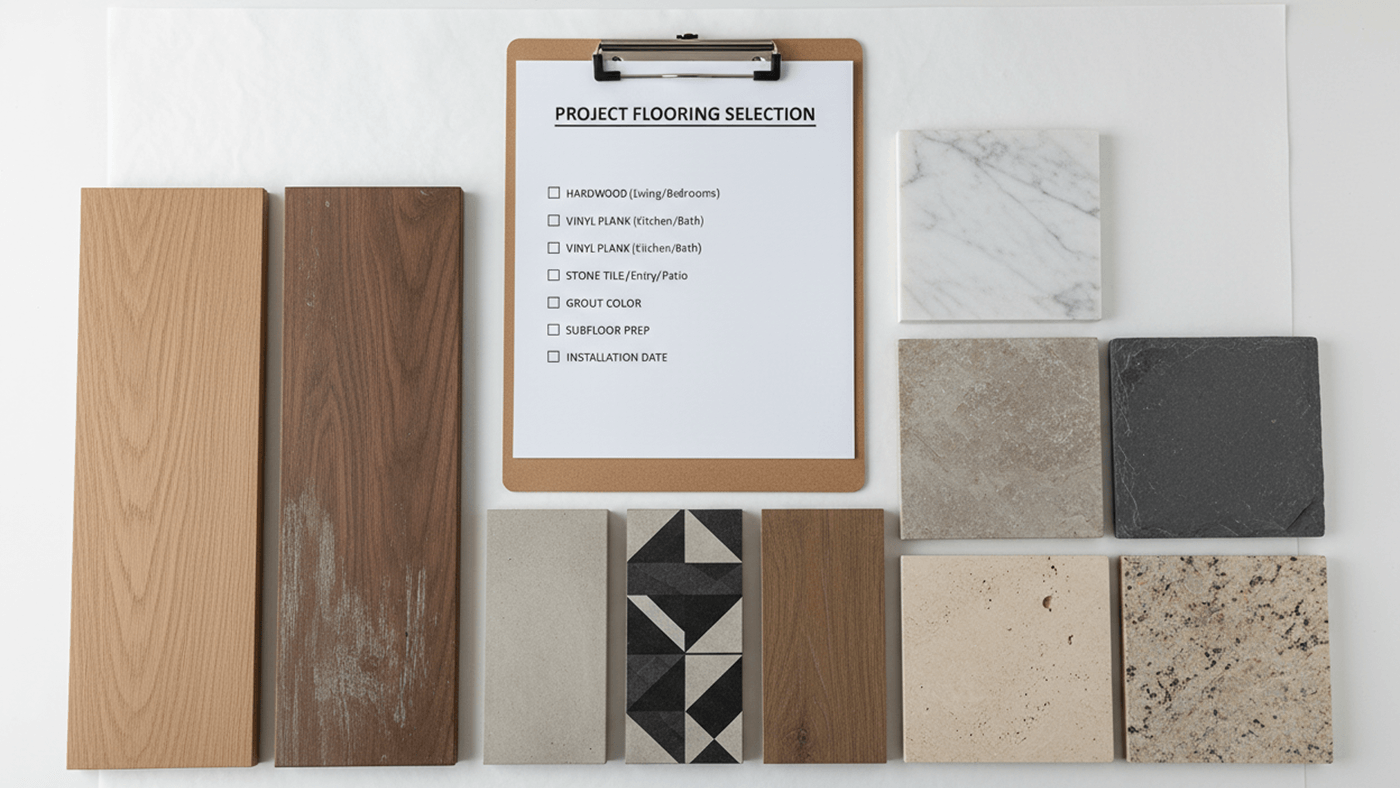
The first step is to check for leftover tiles from the original installation. If extras are unavailable, manufacturers or specialty tile suppliers may still carry similar styles. Matching grout color, width, and texture plays a major role in how well new tile blends with existing flooring.
When an exact match cannot be found, many homeowners choose a complementary tile instead of forcing a near match. Using a transition, border, or design feature can make the change feel intentional rather than accidental.
In situations where matching becomes impractical, some homeowners choose to step back and compare flooring types rather than force a close match. Our guide on Laminate vs Luxury Vinyl Plank explores how these materials differ in appearance, durability, and long-term value, helping homeowners decide whether replacement may be the better option.
Matching Luxury Vinyl and Laminate Flooring
Luxury vinyl and laminate flooring can be difficult to match due to frequent product discontinuations.
Even when similar visuals exist, differences in thickness, texture, or locking systems can prevent a seamless repair. In some cases, leftover cartons from the original installation or distributor overstock may be available.
When exact matches are not possible, transition strips or defined flooring boundaries help maintain visual flow without drawing attention to the repair.
What to Do When an Exact Match Isn’t Possible
Not finding an identical replacement does not mean the project has failed. Many homeowners achieve great results by adjusting their approach.
Using a complementary material can create balance without highlighting differences. Transition strips help separate areas while protecting flooring edges. For hardwood, refinishing the entire floor often delivers the most uniform result. Borders, inlays, or mixed-material layouts can also turn a repair into a design feature.
These solutions focus on cohesion rather than perfection.
Setting Realistic Expectations
Perfectly invisible repairs are rare. Flooring is a living surface that changes over time, and small variations are normal. Once furniture, rugs, and everyday lighting are reintroduced, minor differences often become far less noticeable.
The goal of matching existing flooring is not perfection, but harmony.
When Professional Help Is Worth It
Matching existing flooring requires product knowledge, sourcing experience, and problem-solving skills. A flooring professional can identify materials accurately, locate hard-to-find options, and recommend practical solutions that save time and money.
Professional guidance is especially helpful for older floors, larger repairs, or high-visibility areas.
Final Thoughts
Matching existing flooring is possible, but it requires patience, flexibility, and informed decisions. Understanding how floors age, what materials are available, and which solutions make sense for your space helps ensure the best outcome.
If you are unsure where to begin, working with a flooring professional can help you explore your options and find the closest match or the smartest alternative for your home.
FAQs
Can flooring from different dye lots look different even if it’s the same product?
Yes. Even within the same product line, different production runs (dye lots) can have slight color and pattern variations. This is especially noticeable in wood and tile, which is why mixing old and new material can create visible differences.
Is it better to repair a small section or replace a larger area?
It depends on visibility and layout. In highly visible areas or open spaces, replacing a larger section often creates a more cohesive look. Smaller repairs work best in low-traffic or less noticeable areas
Does lighting affect how well flooring matches?
Absolutely. Natural light, artificial lighting, and even the direction of light can impact how color differences appear. What looks like a close match in one room may look more noticeable in another due to lighting conditions.