Table of Contents
- Why Basement Flooring Deserves Special Attention
- What Makes Basements So Hard on Floors?
- Luxury Vinyl: The Most Reliable Basement Flooring Option
- SPC vs WPC: Which Vinyl Core Is Better for Basements?
- Tile Flooring in Basements: Durable but Not for Everyone
- Flooring Types That Typically Struggle in Basements
- How Long Basement Flooring Really Lasts
- Moisture Control Still Matters (Even With Waterproof Floors)
- Finished vs. Unfinished Basements — Flooring Strategy Matters
- Matching Basement Flooring to How You Use the Space
- Final Thoughts: What Actually Holds Up Over Time
- FAQs
Why Basement Flooring Deserves Special Attention
Basements are not like any other space in your home. Even when finished and climate-controlled, they sit below grade, where moisture, temperature fluctuation, and concrete subfloors create unique challenges. Choosing the best flooring for basements isn’t about trends—it is about selecting materials that can handle real-world conditions over time.
This guide breaks down the best flooring for basements based on moisture performance, durability, and long-term reliability.
Homeowners often focus on kitchens and bathrooms first, but basements quietly demand just as much attention. A poor flooring choice can lead to warping, mold, or premature replacement. The right basement flooring option, on the other hand, creates a comfortable, durable space that lasts for years.
Before comparing products, it helps to understand what basements ask of flooring materials.
What Makes Basements So Hard on Floors?
Basements introduce a combination of conditions that many flooring types simply aren’t built to tolerate:
Moisture vapor rising through concrete slabs
Seasonal humidity changes
Cooler temperatures year-round
Limited natural airflow
Occasional leaks or condensation
Even a basement that feels dry can release moisture slowly over time. That is why waterproof and moisture-tolerant materials dominate the list of what actually works long-term.
When evaluating basement flooring options, performance matters more than appearance—though today’s materials offer both.
Luxury Vinyl: The Most Reliable Basement Flooring Option
If one category consistently earns top marks for basements, it is luxury vinyl for basements.
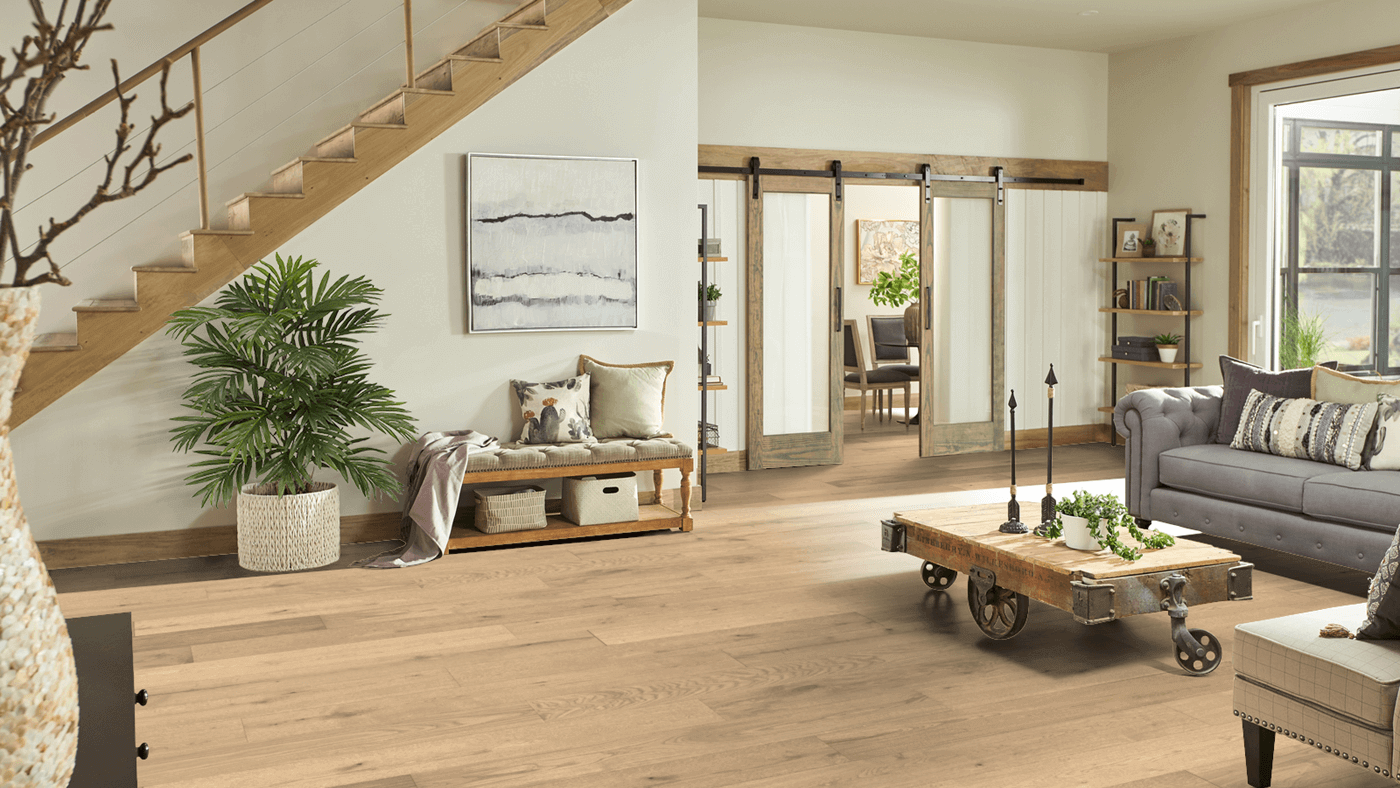
Modern luxury vinyl plank (LVP) and luxury vinyl tile (LVT) are engineered specifically for moisture-prone spaces. Products like MSI Everlife Studio Lark luxury vinyl plank feature 100% waterproof construction, durable wear layers, and stable cores that make them ideal for basement installations. Most options feature waterproof cores, durable wear layers, and stable construction that resists expansion and contraction.
Why Luxury Vinyl Works in Basements
Waterproof construction at the plank level
Compatible with concrete subfloors
Comfortable underfoot compared to tile
Wide design range (wood, stone, concrete looks)
Lower risk of mold growth
Luxury vinyl remains one of the best flooring for basements because it balances moisture resistance with livability, especially in finished lower levels used daily.
SPC vs WPC: Which Vinyl Core Is Better for Basements?
When comparing vinyl basement flooring, you’ll often see SPC vs WPC basement flooring referenced. Both are rigid core vinyl, but they perform slightly differently.
SPC (Stone Plastic Composite)
Denser, more rigid core
Excellent dimensional stability
Handles temperature swings well
Ideal for basements with uneven concrete
WPC (Wood Plastic Composite)
Softer, slightly cushioned feel
Warmer underfoot
Better sound absorption
Slightly more flexible
Both qualify as waterproof basement flooring, but SPC is often favored where moisture and temperature fluctuation are primary concerns.
Tile Flooring in Basements: Durable but Not for Everyone
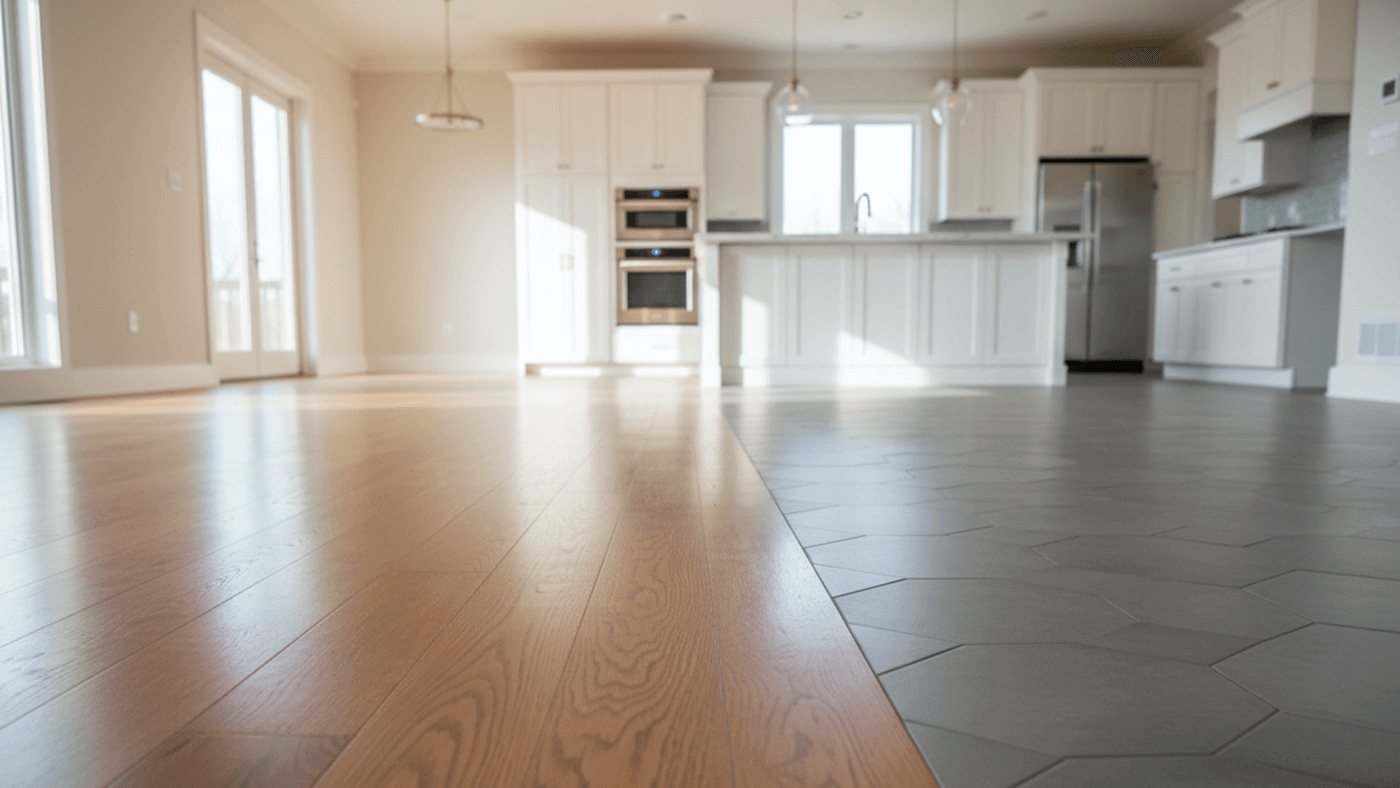
Tile flooring in basements has long been a traditional solution, particularly porcelain and ceramic tile. Tile handles moisture extremely well and can last decades when installed correctly.
Pros of Tile in Basements
Waterproof surface
Excellent durability
Compatible with radiant heating
Strong resale appeal
Considerations
Cold and hard underfoot
Grout maintenance required
Heavier prep requirements
Less forgiving on uneven slabs
Tile remains a solid basement flooring option when durability outweighs comfort priorities.
Flooring Types That Typically Struggle in Basements
Not all flooring materials perform well below grade, even if they work beautifully upstairs.
Solid hardwood is especially vulnerable to moisture-related movement and is generally not recommended for basement use. Traditional laminate flooring also struggles unless specifically designed with waterproof cores.
Carpet can work in very dry basements but carries higher risk due to moisture retention and odor concerns.
How Long Basement Flooring Really Lasts
One reason homeowners search for the best flooring for basements is longevity.
Average lifespan expectations:
Luxury vinyl: 15–25 years
Porcelain tile: 25+ years
SPC or WPC rigid core: 20+ years
Waterproof laminate: 10–15 years (varies by product)
Actual lifespan depends heavily on moisture management, subfloor prep, and usage patterns.
Moisture Control Still Matters (Even With Waterproof Floors)
Even the best waterproof basement flooring performs better when moisture is actively managed. Vapor barriers, slab preparation, and humidity control all support long-term durability.
Best practices include:
Running a dehumidifier year-round
Addressing foundation seepage early
Using manufacturer-approved underlayments
Allowing proper acclimation time
Ignoring moisture conditions shortens the life of any flooring material. Consistent monitoring of humidity levels and prompt attention to minor leaks can significantly extend the performance window of basement flooring installations over time.
Finished vs. Unfinished Basements — Flooring Strategy Matters
Not all basements are used the same way, and that distinction plays a major role in selecting the best flooring for basements. A partially finished basement used for storage has very different demands than a fully finished living space.
In unfinished or utility-focused basements, durability and moisture resistance matter more than comfort. Rigid vinyl or porcelain tile often performs best because these materials tolerate temperature swings, occasional dampness, and heavier wear.
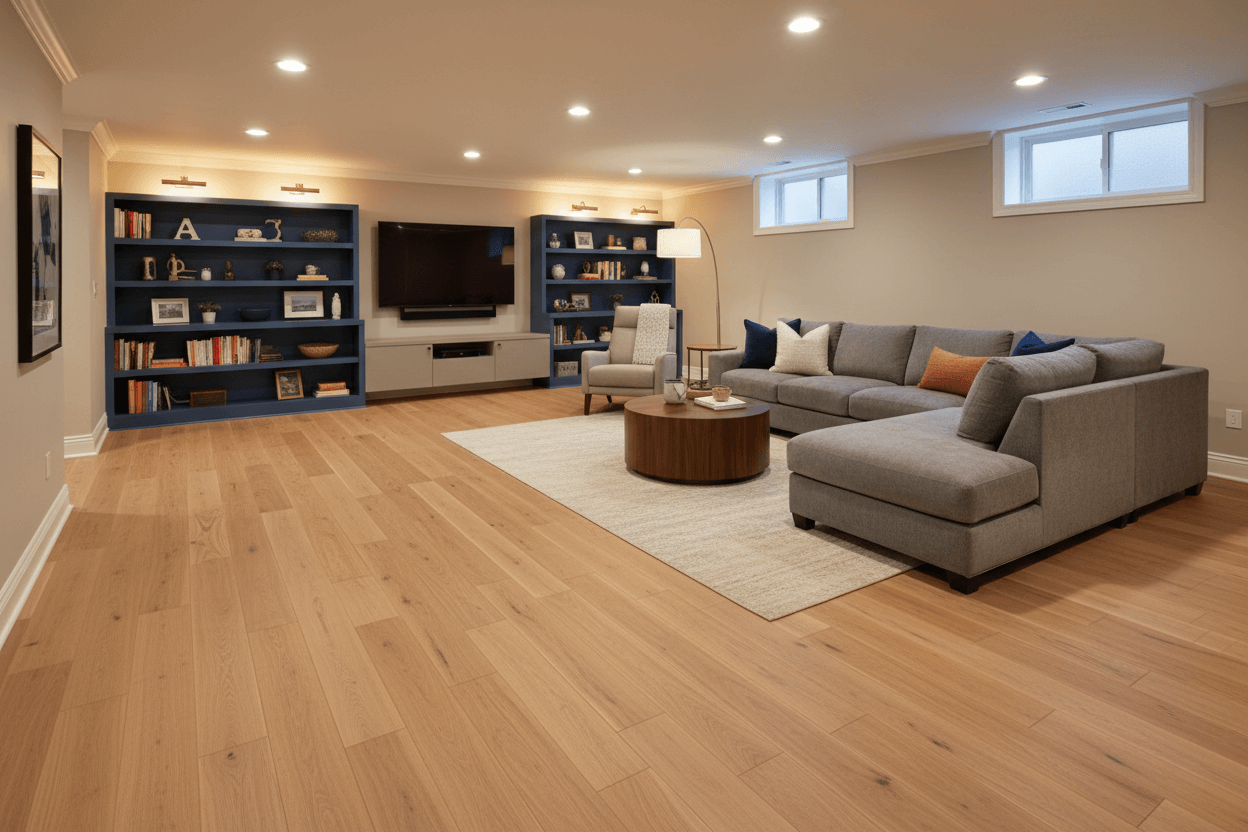
Finished basements—especially those used as family rooms, offices, or guest areas—benefit from flooring that feels warmer and quieter. Luxury vinyl for basements is frequently chosen here because it softens sound, resists moisture, and creates a cohesive look with upper floors.
Understanding how your basement is used helps narrow basement flooring options quickly and prevents choosing a product that looks great but underperforms long-term.
Matching Basement Flooring to How You Use the Space
The best basement flooring option depends on function as much as environment.
Family room or media space → Luxury vinyl plank
Home office → SPC vinyl or LVT
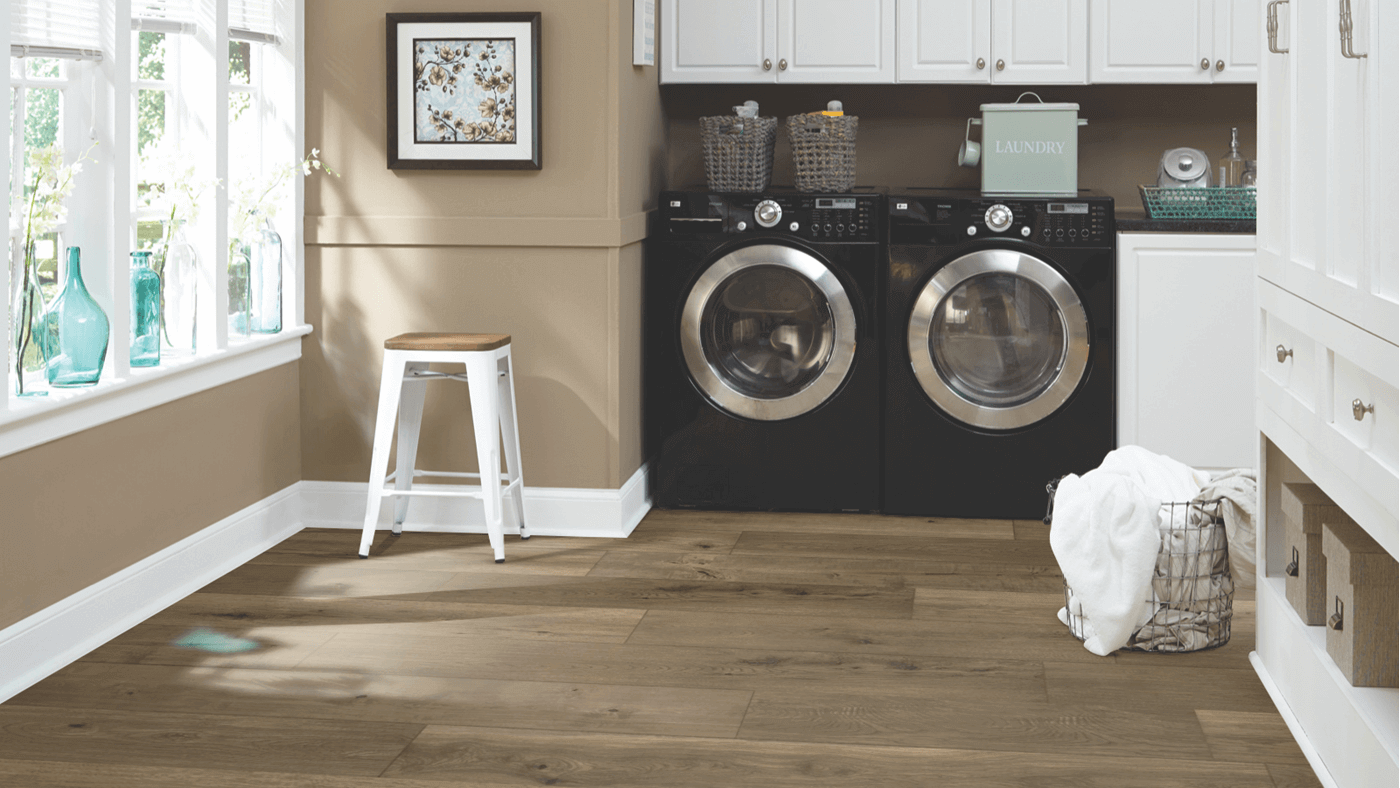
Laundry or utility area → Porcelain tile
Guest suite → WPC vinyl for comfort
Workout room → Rigid vinyl with cushioning
Planning around daily use ensures your flooring supports real life, not just design goals.
Final Thoughts: What Actually Holds Up Over Time
The best flooring for basements isn’t about what looks good on day one—it is about what still performs years later. Waterproof vinyl, rigid core technology, and porcelain tile consistently outperform traditional materials in below-grade spaces.
Luxury vinyl for basements offers the best balance of comfort, durability, and moisture resistance for most homes. Tile delivers unmatched longevity where firmness is acceptable. Understanding SPC vs WPC basement flooring helps fine-tune performance based on your specific conditions.
Choosing the right basement flooring option creates a space that feels finished, functional, and built to last—without costly surprises down the road.
Many homeowners choose waterproof luxury vinyl for basements because it handles moisture, concrete subfloors, and daily wear with ease. Products like MSI Everlife Studio Lark luxury vinyl plank combine durable waterproof construction with realistic wood visuals, making them a practical option for finished basement spaces.
MSI Everlife Studio Lark
$93.21
Minimum Order: 200 Sq. Ft.Orders less than 200 Sq. Ft. will be canceled Width: 9” Length: 48” Thickness: 7mm + 2mm Coverage: 17.96 Sq. Ft./Carton Attached Pad: Yes Wearlayer: 30 mil Install Type: Floating Residential Warranty: Limited Lifetime Commercial Warranty:… read more

FAQs
Is vinyl plank flooring safe to install directly on a concrete basement floor?
Yes. Luxury vinyl plank flooring is commonly installed directly over concrete subfloors in basements. Most rigid core and luxury vinyl products are designed to handle concrete surfaces when the slab is properly prepared and moisture levels are within manufacturer guidelines. This is one reason luxury vinyl is often considered one of the best flooring for basements—it combines moisture resistance with simple installation over concrete.
What is the most waterproof flooring for basements?
Porcelain tile and rigid core luxury vinyl are two of the most waterproof basement flooring options available. Porcelain tile does not absorb water and performs extremely well in damp environments. However, many homeowners prefer luxury vinyl for basements because it provides waterproof performance while also offering a warmer, quieter surface underfoot.
Can laminate flooring be installed in basements?
Some waterproof laminate flooring products are designed for basement use, but traditional laminate flooring can struggle with moisture exposure. If you choose laminate, look for products specifically labeled as waterproof and approved for below-grade installations. Many homeowners still prefer luxury vinyl or tile when selecting the best flooring for basements because they provide stronger moisture resistance.