Table of Contents
- Quick Take
- Step 1: Measure each space (the right way)
- Step 2: Convert square footage to what you actually buy (cartons)
- Step 3: Add the right waste factor
- Step 4: Consider layout choices that increase waste
- Step 5: Account for trims and transitions (so the job finishes clean)
- Step 6: Check these “easy-to-miss” details before ordering
- Step 7: Put it all together (example)
- Common questions (and quick answers)
- Final Thoughts
- FAQs
How Much Flooring Should I Order? A Simple Room-by-Room Guide (Plus Waste Factor Chart)
If you’ve ever asked, “how much flooring should I order,” you’re not alone. Ordering too little can stop an install mid-project, delay your timeline, and sometimes force a color/lot mismatch if the product sells out. Ordering way too much can feel like throwing money away—especially when freight and restocking fees come into play.
At Flooring Market, we help homeowners avoid both headaches by using a clear measuring method, the right waste factor for the material, and a few pro-level checks before you click “buy.”
Quick Take
How much flooring should I order? Start with your total square footage, add the correct waste factor (usually 5–15%), and then add extra for stairs, patterns, and awkward layouts. The goal is to have enough product from the same run to finish the job confidently—without paying for cartons you’ll never open.
Think: What can go wrong if you order the wrong amount?
Shortage risk: you may not be able to match the same color/lot later.
Schedule risk: installers may reschedule, and prep can’t move forward.
Budget risk: over-ordering adds cost and can be expensive to ship back.
Ask: What do you actually need to know to order correctly?
You need four things:
Accurate room measurements
The installation pattern (straight, diagonal, herringbone, etc.)
The right waste factor for the material
Any add-ons that increase waste (stairs, closets, angle cuts, transitions)
Yes: You can estimate this reliably (without being a contractor)
Most projects can be dialed in within a carton or two by following a consistent process and double-checking a few common “missed” areas.
Act: Use this step-by-step ordering checklist
Step 1: Measure each space (the right way)
To answer “how much flooring should I order” accurately, measure every room separately and then combine totals at the end.
For each room:
Measure length × width in feet
If the room isn’t a perfect rectangle, break it into rectangles and add them together
Round up to the nearest tenth (or even quarter) of a foot to reduce under-ordering
Example (simple rectangle):
12.5 ft × 14.0 ft = 175.0 sq ft
Example (L-shaped room):
Rectangle A: 10 ft × 12 ft = 120 sq ft
Rectangle B: 6 ft × 8 ft = 48 sq ft
Total = 168 sq ft
Don’t forget “small” spaces that add up:
Closets
Pantries
Hallways
Powder rooms
Laundry rooms
Under-cabinet toe-kick returns (if flooring runs under cabinetry edges)
Step 2: Convert square footage to what you actually buy (cartons)
Flooring is typically sold by the carton. Each product lists sq ft per carton. Divide your project total by carton coverage, then round up.
Cartons needed = (Total sq ft ÷ Sq ft per carton) → round up
Why round up? Because a half-carton doesn’t exist, and you’ll need extra pieces for cuts.
Step 3: Add the right waste factor
When people search “how much flooring should I order,” the waste factor is usually the missing piece. Waste is not “throwaway.” It’s the material you need for:
End cuts
Staggered seams
Defects/boards you reject
Pattern matching
Mistakes (they happen)
Waste Factor Chart (typical projects)
| Flooring type / install style | Recommended waste factor |
|---|---|
| Straight lay (LVP, laminate, engineered wood) in simple rooms | 5–8% |
| Straight lay in multiple rooms, hallways, closets | 8–10% |
| Solid hardwood (straight lay) | 8–10% |
| Tile (straight lay) | 10% |
| Diagonal layout (tile or planks) | 12–15% |
| Herringbone / chevron | 15–20% |
| Very small rooms, lots of angles, older homes | 12–15% |
If you want one safe default for most homes: add 10%.
Step 4: Consider layout choices that increase waste
Your design decisions directly affect how much flooring should i order.
Diagonal installs
Diagonal cuts create more off-cuts and reduce the usable remainder. If you’re installing diagonally, plan for at least 12–15% waste.
Herringbone or chevron
These patterns look incredible, but they’re cut-heavy and require more planning. Budget 15–20% waste, and confirm whether you need a specific “A/B” plank system.
Direction changes
If you change direction between rooms (for example, running planks lengthwise in one room and crosswise in another), waste increases.
Stairs
Stairs are not included in the square footage of your upstairs hallway unless you measure them. Each step requires its own pieces, and the number of steps varies by home. If you have stairs, measure them separately or confirm the count with your installer.
Step 5: Account for trims and transitions (so the job finishes clean)
“How much flooring should i order” is also about ordering what completes the installation:
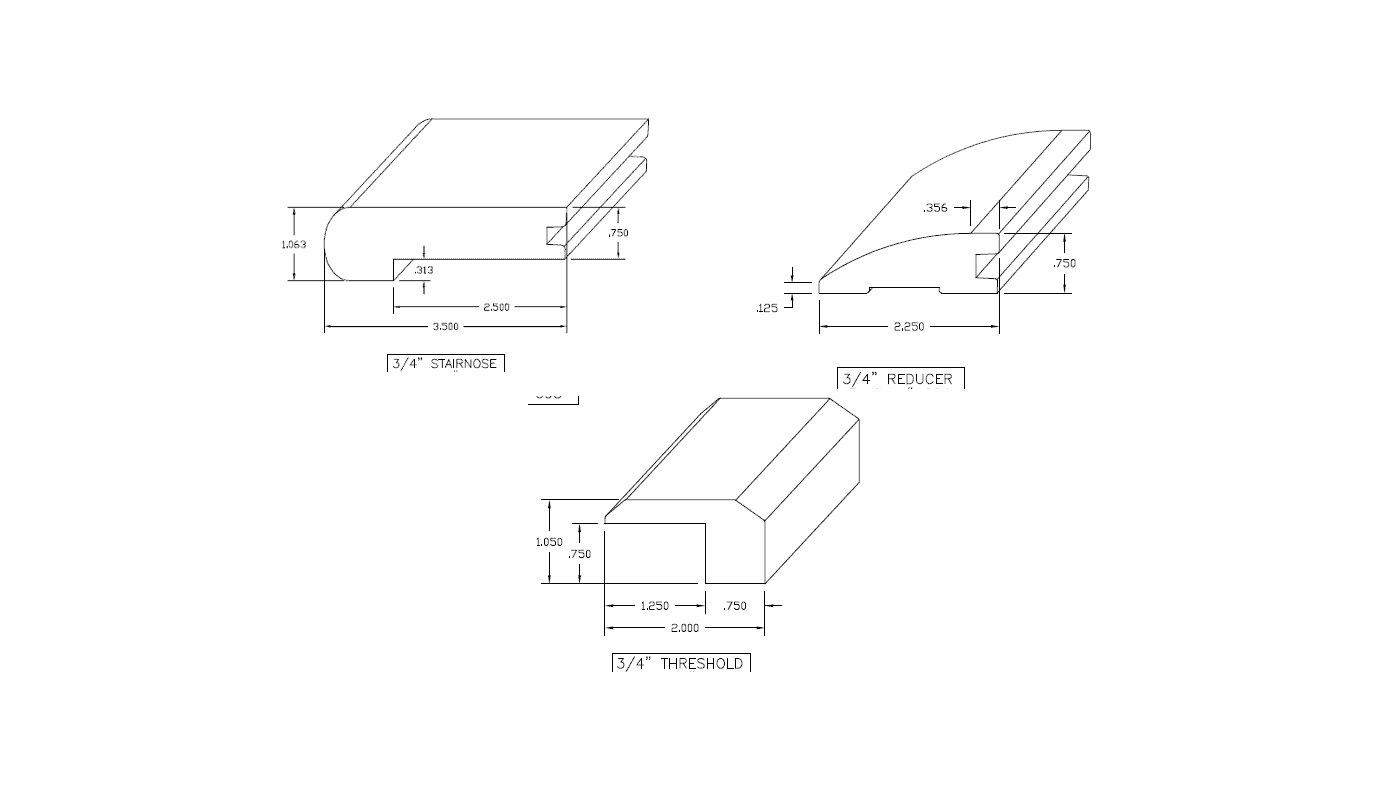
Reducers (for height changes)
T-moldings (doorways and transitions)
Stair noses
Quarter round or base shoe (if needed)
End caps (sliding doors, fireplaces)
A common frustration is having plenty of flooring but missing the matching trim pieces, which can delay the finish work.
Flooring Market tip: On many product pages, you can click the Trim & Accessories button to see coordinating options. If you don’t see what you need, our team can help you locate compatible transitions.
Step 6: Check these “easy-to-miss” details before ordering
Before you place the order, run this quick accuracy check:
✔ Confirm the product is sold in cartons (and what the carton coverage is)
✔ Confirm you measured closets and hallways
✔ Confirm your waste factor matches your install style
✔ Confirm you’re ordering enough for your layout (diagonal, herringbone, etc.)
✔ Confirm you’re comfortable with your “extras” plan (keep one carton vs. return)
If you’d like help thinking through measurements, layout, or waste factors, our team can help guide the process. Contact us with your questions before ordering.
A note on future repairs
Many homeowners intentionally keep one extra carton after installation for future repairs—especially in pet homes, rentals, or high-traffic areas. Not required, but often helpful.
Step 7: Put it all together (example)
Let’s say your measured total is 920 sq ft and the flooring you chose covers 23.5 sq ft per carton.
Base cartons:
920 ÷ 23.5 = 39.15 → round up to 40 cartonsWaste factor:
Straight lay across multiple rooms = 10%
920 × 0.10 = 92 sq ft
New total:
920 + 92 = 1,012 sq ft
Cartons:
1,012 ÷ 23.5 = 43.06 → round up to 44 cartons
This is the most practical way to answer “how much flooring should i order” with confidence: calculate, add waste, then convert to cartons.
Common questions (and quick answers)
Do I really need a waste factor?
Yes. Even perfect installers need cuts, and manufacturers expect you to plan for waste.
What if my installer says a different number?
Follow your installer’s guidance. They may know your home’s layout, pattern, and cut complexity better than an online estimate.
Can I order “exact” square footage and hope it works?
This is the most common cause of shortages. Exact square footage rarely accounts for cuts, defects, and seam staggering.
Does tile need more waste than planks?
Usually, yes—especially for diagonal layouts or tight spaces with multiple corners, niches, and doorways.
Final Thoughts
How much flooring should i order? Measure carefully, add the right waste factor for your material and layout, and round up to full cartons. That approach protects you from delays, mismatched dye lots, and last-minute panic.
While our team is always happy to help guide your planning and answer product-related questions, final flooring quantities should be based on accurate measurements provided by you or your installer. On-site conditions and installation methods can vary, so installer-confirmed measurements are the best way to ensure the correct amount is ordered.
FAQs
Should I order extra flooring in case the product is discontinued later?
Many homeowners choose to keep one unopened carton after installation for potential future repairs. Flooring collections and dye lots can change over time, and having extra material from the original run can make small repairs much easier if damage occurs years later.
Can flooring from different production runs look slightly different?
Yes. Flooring manufactured at different times may have slight variations in color tone or texture due to natural material differences and production conditions. Ordering enough flooring for the entire project at once helps reduce the risk of visible variation between rooms or phases of the installation
Can flooring quantities change once the installer starts the project?
Occasionally, yes. Unexpected layout challenges, hidden subfloor conditions, or design changes during installation can increase material usage slightly. Having a small buffer of extra material helps installers adjust without interrupting the project