Table of Contents
- What Is Rigid Core Vinyl Flooring?
- What Is SPC Flooring?
- What Is WPC Flooring?
- SPC vs WPC Flooring: Core Construction Explained
- Durability and Dent Resistance
- Comfort and Sound Performance
- Waterproof Performance
- Thickness and Installation Differences
- Design, Style, and Visual Appeal
- Price Differences
- Best Uses for SPC Flooring
- Best Uses for WPC Flooring
- How to Choose Between SPC vs WPC Flooring
- Final Thoughts
- FAQs
SPC vs WPC Flooring: What’s the Difference and Which Is Right for You?
Luxury vinyl flooring has evolved rapidly over the last decade, and today’s rigid core options are stronger, more realistic, and more versatile than ever. If you’re shopping for vinyl plank flooring, you’ve likely encountered two terms that sound similar but perform differently: SPC and WPC. Understanding SPC vs WPC flooring is essential when choosing the right floor for your home, because while both fall under the rigid core category, they are engineered for different priorities, lifestyles, and expectations.
Both SPC and WPC flooring are waterproof, dimensionally stable, and designed to handle modern living. However, the differences in core construction, comfort, durability, and cost can significantly impact how each floor performs in your space.
Let’s break it all down in a clear, practical way.
What Is Rigid Core Vinyl Flooring?
Rigid core flooring is a category of luxury vinyl plank (LVP) designed with a solid internal core that resists movement caused by temperature changes and moisture. Traditional flexible vinyl could expand, contract, or telegraph imperfections from the subfloor. Rigid core vinyl flooring solves those issues with enhanced stability and strength.
SPC flooring and WPC flooring are the two primary rigid core options available today, and both are engineered to outperform older vinyl products.
What Is SPC Flooring?
SPC flooring stands for Stone Plastic Composite (sometimes referred to as Stone Polymer Core). Its core is made from a blend of limestone powder, PVC, and stabilizers, resulting in an extremely dense and rigid plank.
Key Characteristics of SPC Flooring
Ultra-dense stone-based core
Exceptional dimensional stability
100% waterproof construction
Thin but extremely strong profile
Excellent resistance to dents and impact
Because of its density, SPC rigid core flooring performs exceptionally well in demanding environments.
What Is WPC Flooring?
WPC flooring stands for Wood Plastic Composite (also known as Wood Polymer Core). While it is still considered rigid core vinyl flooring, its internal structure includes a foamed core that creates a thicker, more cushioned plank.
Key Characteristics of WPC Flooring
Rigid but slightly flexible core
Thicker plank construction
Softer, warmer feel underfoot
Better sound absorption
Fully waterproof performance
WPC vinyl flooring prioritizes comfort and acoustics while still delivering stability.
SPC vs WPC Flooring: Core Construction Explained
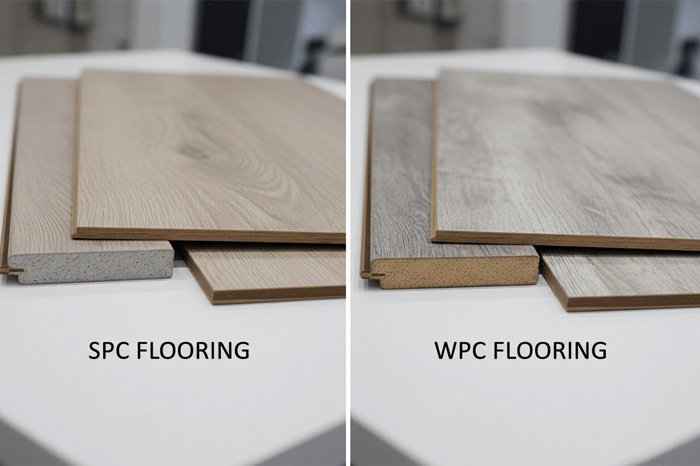
The biggest difference between SPC vs WPC flooring lies in what’s inside the plank.
SPC Core Construction
Limestone-based composite
Extremely hard and dense
Minimal flex
Superior performance under heavy loads
WPC Core Construction
Foamed composite core
Thicker and lighter
Slight cushioning effect
Better sound dampening
Both cores resist expansion and contraction, but they serve different functional goals.
Durability and Dent Resistance
If durability is your top concern, SPC flooring has a clear advantage.
SPC rigid core flooring:
Resists dents from heavy furniture and appliances
Handles rolling loads more effectively
Performs well in high-traffic homes and commercial settings
WPC flooring is still durable, but because of its softer core, it may show indentation under extremely heavy or concentrated weight.
Best choice for durability: SPC rigid core flooring options
Comfort and Sound Performance
When comparing SPC vs WPC flooring for comfort, WPC flooring takes the lead.
Its thicker, cushioned structure:
Feels warmer and softer underfoot
Reduces footstep noise
Absorbs sound between floors
This makes WPC vinyl flooring ideal for:
Bedrooms
Living areas
Upstairs installations
Condos and multi-level homes
SPC flooring feels firmer and may transmit more sound unless paired with a quality attached pad or underlayment. For spaces where comfort and noise reduction matter most, exploring WPC vinyl flooring options makes it easier to compare thicker, quieter rigid core designs built for everyday living.
Waterproof Performance
SPC vs WPC flooring is a tie when it comes to moisture resistance.
Both options are:
100% waterproof at the plank level
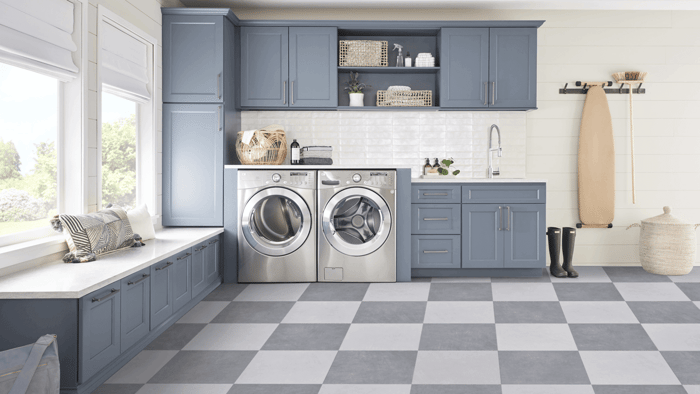
Safe for kitchens, bathrooms, basements, and laundry rooms
Resistant to spills, humidity, and everyday moisture
It’s important to remember that waterproof planks do not prevent water from reaching the subfloor during major leaks or flooding. Prompt cleanup is always essential.
Thickness and Installation Differences
WPC flooring is generally thicker than SPC flooring.
SPC flooring: Typically 4–6 mm thick (plus attached pad)
WPC flooring: Typically 6–8 mm thick (plus attached pad)
Installation Considerations
Both SPC and WPC flooring:
Install as floating floors
Use click-lock installation systems
Can be installed over most existing hard surfaces
SPC’s thinner profile can be beneficial in remodels where door clearance or floor height transitions are a concern.
Design, Style, and Visual Appeal
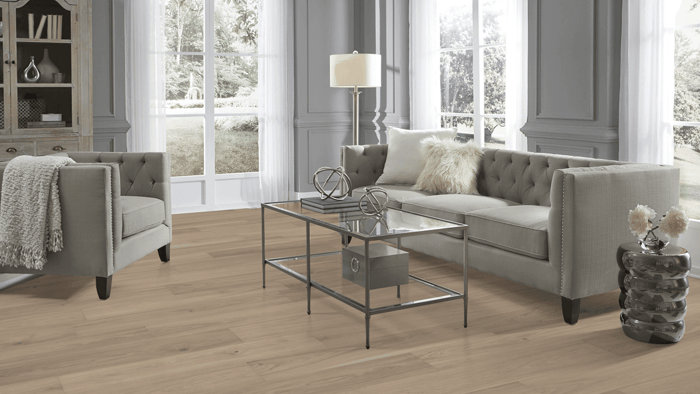
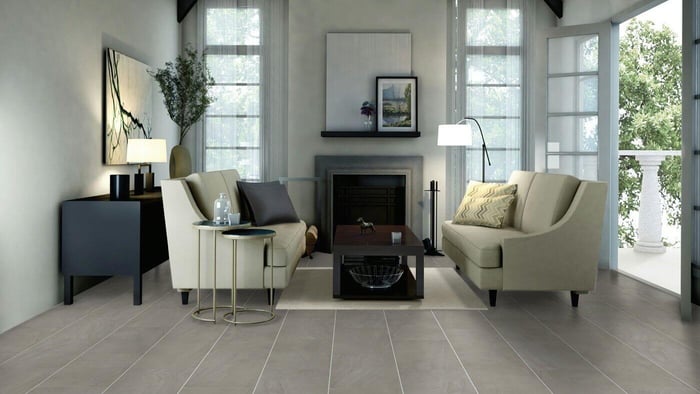
Visually, SPC and WPC flooring often look identical.
Both offer:
High-definition wood and stone visuals
Embossed-in-register textures
Wide plank and modern color options
The appearance depends more on the wear layer quality, print technology, and brand than on whether the core is SPC or WPC.
Price Differences
In most cases:
SPC flooring is more budget-friendly
WPC flooring costs slightly more
The price difference reflects WPC’s thicker construction and enhanced comfort features. For homeowners seeking maximum value with rigid core performance, SPC flooring is often the more economical choice.
Best Uses for SPC Flooring
SPC rigid core flooring is well suited for:
High-traffic households
Homes with kids and pets
Basements and slab installations
Kitchens and entryways
Light commercial spaces
Best Uses for WPC Flooring
WPC vinyl flooring performs best in:
Bedrooms and living rooms
Upstairs areas
Condos and apartments
Spaces where sound reduction matters
Homes prioritizing comfort underfoot
How to Choose Between SPC vs WPC Flooring
Ask yourself these questions:
Do you need maximum dent resistance? → SPC
Do you want softer, quieter floors? → WPC
Is your space high traffic or commercial-like? → SPC
Is comfort a priority for daily living? → WPC
Are you working within a tighter budget? → SPC
There’s no universally “better” option — only the best fit for how you live.
Final Thoughts
Understanding SPC vs WPC flooring helps you make a confident, informed decision when choosing rigid core vinyl flooring. SPC offers unmatched durability and stability, while WPC delivers enhanced comfort and sound control. Both provide waterproof performance, modern design, and long-term reliability.
At Flooring Market, our experts help homeowners compare SPC flooring and WPC flooring side by side to find the best solution for their space, lifestyle, and budget. With the right guidance, choosing rigid core vinyl flooring becomes simple — and the result is a floor designed for real life.
FAQs
Is SPC or WPC flooring better for uneven subfloors?
Both SPC and WPC rigid core flooring can tolerate minor subfloor imperfections better than traditional vinyl, but proper subfloor preparation is still important. WPC’s slightly thicker and more forgiving core may mask small irregularities better, while SPC typically requires a flatter surface for best performance.
Do SPC and WPC floors require underlayment?
Many SPC and WPC flooring products come with an attached pad, which eliminates the need for additional underlayment in most installations. However, certain subfloor conditions or sound-control requirements may still call for a compatible underlayment layer.
Are SPC and WPC floors safe for homes with pets?
Yes. Both SPC and WPC flooring are popular in pet-friendly homes because they are waterproof and resist everyday wear. Choosing a product with a durable wear layer can help minimize visible scratching from pet activity.