Hardwood vs Luxury Vinyl Flooring: Which Adds More Value to Your Home?
There’s no single winner in the hardwood vs luxury vinyl flooring debate—just two excellent paths depending on what “value” means to you. Hardwood delivers timeless beauty, strong resale appeal, and a lifespan measured in generations. Luxury vinyl offers everyday comfort, waterproof performance, and an approachable price point that fits modern living.
For many homeowners, the real decision comes down to long-term investment versus low-maintenance practicality. Understanding how each option performs in real homes—not just showrooms—makes it easier to choose the right floor for your lifestyle.
Why This Comparison Comes Up So Often
If you’re shopping for flooring in 2025, hardwood and luxury vinyl are likely at the top of your list. Both feature wide planks, realistic textures, and natural color palettes that work across design styles. But while they may look similar at first glance, their strengths serve very different priorities.
Hardwood has long been associated with high-end homes and strong resale value. Real estate professionals consistently point to wood floors as a feature buyers notice immediately. Luxury vinyl, on the other hand, has gained popularity for its water resistance, comfort underfoot, and easy upkeep—qualities that matter more than ever in busy households.
That’s why the hardwood vs luxury vinyl flooring comparison is less about which is “better” and more about which delivers the kind of value that matters most to you.
Defining the Two Flooring Types
Hardwood Flooring
Hardwood flooring comes in both solid and engineered forms. Solid hardwood is milled from a single piece of wood and can be refinished multiple times, making it a true long-term investment. Engineered hardwood uses a real wood surface bonded to layers underneath, offering improved stability in kitchens or areas with mild humidity.
Both types are recognized by buyers and appraisers as premium features that enhance a home’s overall appeal and long-term value.
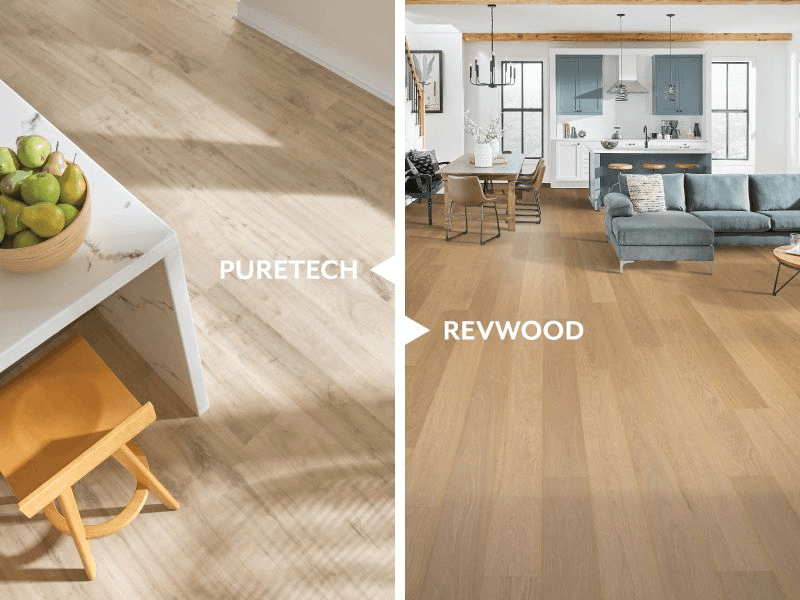
Homeowners exploring hardwood options will find a wide range of styles and finishes available through Mohawk hardwood flooring, including both solid and engineered constructions designed to support long-term value and everyday livability. From classic oak visuals to modern wide-plank designs, these options reflect the characteristics buyers often associate with premium flooring.
Luxury Vinyl Flooring (LVP)
Luxury vinyl plank flooring is made from a dense vinyl core topped with a high-resolution, textured wear layer. The surface is waterproof, softer underfoot than wood or tile, and designed to handle everyday wear with minimal maintenance.
Luxury vinyl is available in a wide range of styles, including wood-look, stone-look, and modern patterns that suit contemporary spaces.
Style & Visual Appeal
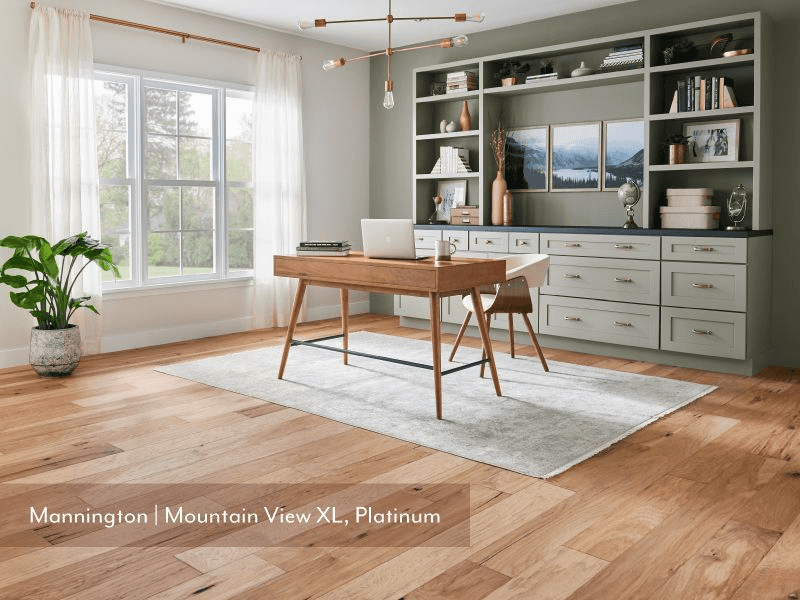
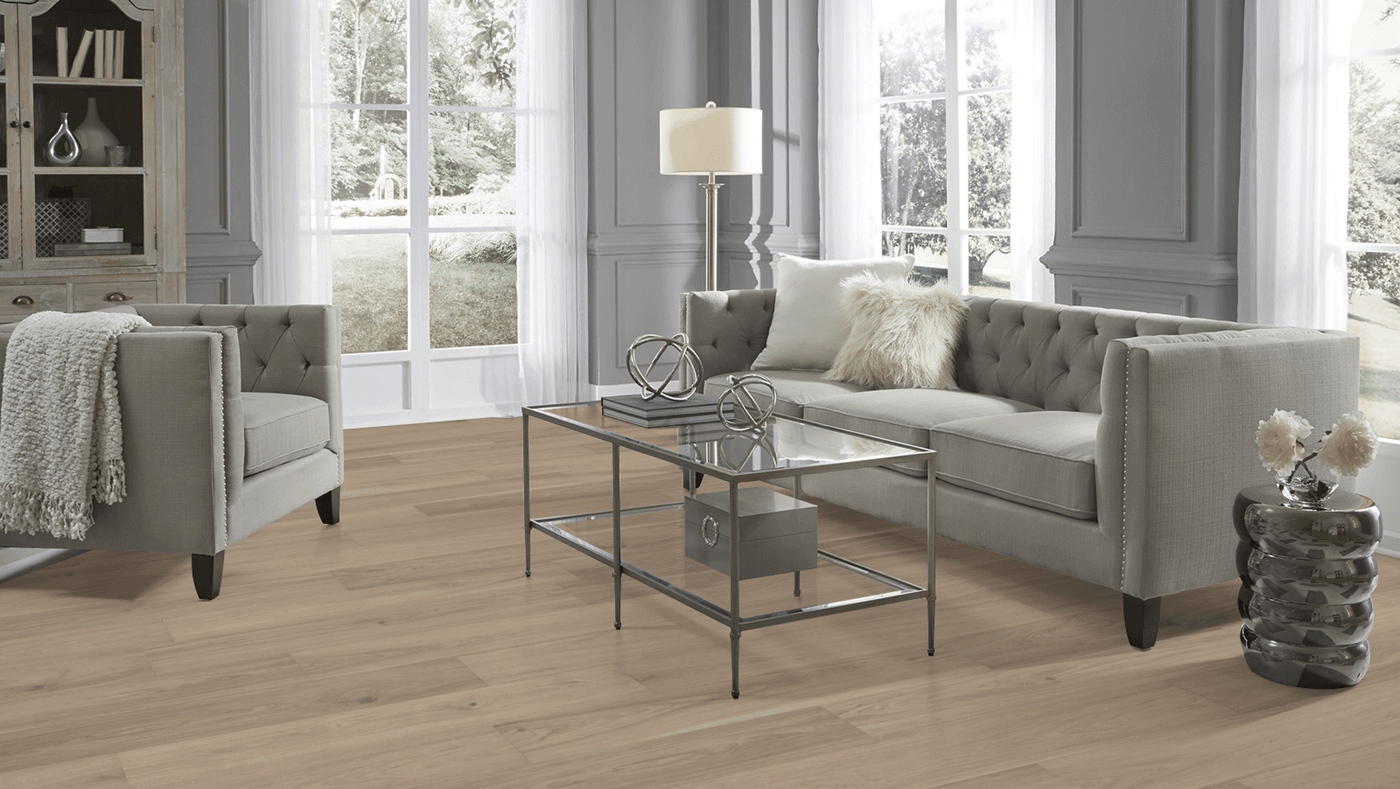
Hardwood’s appeal lies in its authenticity. Natural grain variation, subtle color shifts, and real texture create warmth that never feels manufactured. In current design trends, wide-plank oak, walnut, and warm mid-brown tones with matte finishes dominate both traditional and modern interiors.
Luxury vinyl has evolved dramatically. Today’s designs use embossed-in-register technology, meaning the texture aligns with the printed grain pattern. This creates a convincing look and feel that works well in spaces where real wood might struggle.
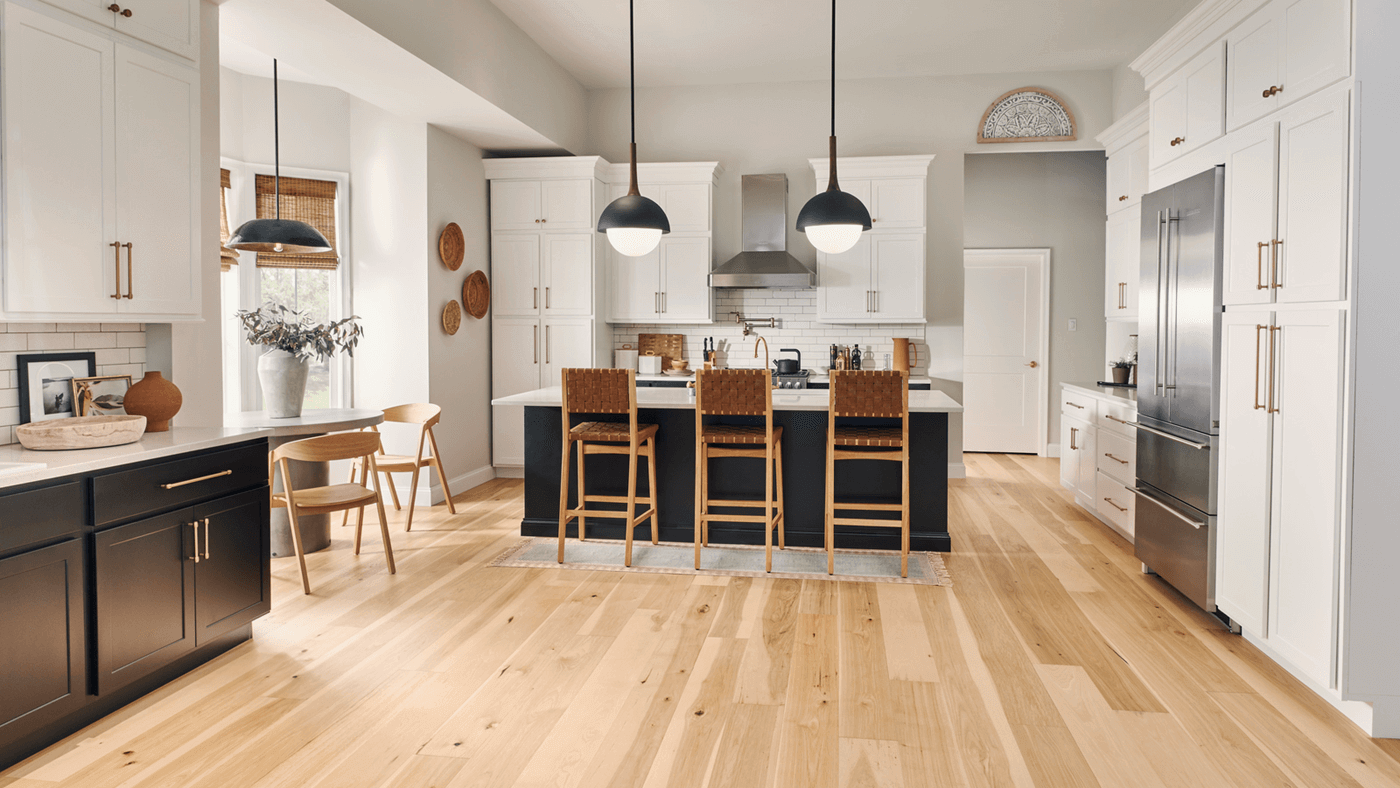
While hardwood still carries unmatched character, luxury vinyl closes the gap visually—especially in kitchens, basements, and open-concept layouts.
Durability & Everyday Living
Hardwood is strong but not indestructible. Heavy furniture, pet claws, or repeated chair movement can leave marks over time. The advantage is repairability. Scratches and wear can be sanded away, giving the floor a fresh start even decades later.
Luxury vinyl trades refinishing potential for resilience. It resists everyday scuffs and handles high foot traffic with ease. While deep dents can occur under heavy loads, most homeowners appreciate the peace of mind that comes with a more forgiving surface.
In the hardwood vs luxury vinyl flooring decision, durability often depends on how active your household is and how much maintenance you’re comfortable with.
Moisture & Maintenance Considerations
Hardwood and moisture have a complicated relationship. Small spills wiped up quickly are usually fine, but prolonged exposure to water can cause swelling or warping. This limits hardwood to dry, climate-controlled areas of the home.
Luxury vinyl shines in moisture-prone spaces. Spilled drinks, pet accidents, or wet shoes are easy to manage, making vinyl a popular choice for kitchens, bathrooms, and basements. While seams can allow water to reach the subfloor if ignored, overall performance is far more forgiving.
From a maintenance standpoint, vinyl requires simple sweeping and occasional mopping. Hardwood needs periodic refinishing every several years to maintain its appearance.
Longevity & Value Over Time
Hardwood earns its reputation as a forever floor. With proper care, it can last 20 to 50 years or more, and in some historic homes, well over a century. This longevity contributes to its strong resale value and long-term return on investment.
Luxury vinyl typically lasts 15 to 20 years, which works well for homeowners who plan to update their space periodically. While it doesn’t match hardwood’s lifespan, its lower upfront cost and ease of replacement make it a practical option.
When weighing hardwood vs luxury vinyl flooring, think about how long you plan to stay in your home and whether resale value or everyday convenience carries more weight.
Cost Awareness
Hardwood is a premium investment. Solid wood, in particular, comes with higher material and installation costs. Engineered hardwood can reduce some of that expense while still offering real wood appeal.
Luxury vinyl sits comfortably in the budget-to-midrange category. It allows homeowners to achieve a high-end look without the higher price tag or maintenance commitment.
Cost alone doesn’t determine value, but it often influences where each flooring type makes the most sense within a home.
Hardwood vs Luxury Vinyl Flooring: Side-by-Side Comparison
| Feature | Hardwood | Luxury Vinyl (LVP) |
|---|---|---|
| Style & Appearance | Timeless, authentic wood grain | Realistic visuals in wood, stone, or patterns |
| Durability | Strong, refinishable | Good, softer surface may dent |
| Moisture Resistance | Poor to moderate | Excellent (planks waterproof; edges vulnerable) |
| Maintenance | Requires refinishing and upkeep | Simple sweep and mop |
| Longevity | 20–50+ years | 15–20 years |
| Resale Value | High, long-term ROI | Moderate, improving |
| Cost Position | Premium | Budget to midrange |
Which Adds More Value to Your Home?
The answer depends on how you define value.
If resale appeal and long-term investment matter most, hardwood remains the gold standard. It elevates interiors, photographs beautifully, and continues to attract buyers.
If everyday comfort, durability, and ease of maintenance matter more, luxury vinyl delivers exceptional functional value. It’s quieter, warmer, and easier to live with in active homes.
Many homeowners choose a hybrid approach: hardwood in main living areas for prestige and vinyl in kitchens, basements, or utility spaces for practicality.
The Bottom Line
Both options bring value—just in different ways.
Hardwood adds lasting financial and aesthetic value that stands the test of time.
Luxury vinyl adds practical value that simplifies everyday life.
When deciding between hardwood vs luxury vinyl flooring, the best choice is the one that aligns with your lifestyle, budget, and long-term plans. With the right guidance, either option can be a smart and satisfying investment in your home.