Table of Contents
- Why Flooring Trim Is Essential — Not Optional
- Common Trim Pieces Offered for Flooring
- How Trim Availability Varies by Flooring Type
- Matching Floor Trim: Blend In or Stand Out?
- Flooring Transition and Trim in Open-Concept Homes
- Planning Trim for Stairs, Hallways, and Elevation Changes
- Using the Trim & Accessories Section at Flooring Market
- Installer Insight: Why Trim Selection Affects Floor Longevity
- Room-by-Room Trim Planning Guide
- Frequently Asked Questions About Flooring Trim
- Common Mistakes to Avoid When Choosing Trim
- Final Thoughts
- FAQs
What Trim Pieces Are Offered for Flooring?
When planning a flooring project, most homeowners focus on selecting the right material, color, and style. However, one of the most overlooked — yet most important — details comes after the flooring itself is chosen: what trim pieces are offered for flooring and how they complete the installation.
Trim is the finishing system that allows flooring to function properly and look intentional. It covers expansion gaps, protects exposed edges, manages height changes, and creates clean transitions between rooms and surfaces. Without the correct trim, even the most expensive floor can appear unfinished or fail prematurely. Understanding what trim pieces are offered for flooring helps homeowners avoid installation issues, improve long-term durability, and achieve a polished final result. You can explore available flooring trim options by browsing our Trim & Accessories page or by viewing compatible trim on each product page.
At Flooring Market, every flooring product page includes a Trim & Accessories button located just below the product details. This section displays coordinating trim and accessories designed to work with that flooring’s thickness and installation method, making it easier to plan trim selections alongside your flooring choice.
Why Flooring Trim Is Essential — Not Optional
Trim is not decorative filler. It plays a critical structural and visual role in every flooring installation.
Proper flooring transition and trim:
Allow floating floors to expand and contract naturally
Protect plank and tile edges from chipping or cracking
Reduce trip hazards in doorways and open areas
Smooth transitions between flooring materials
Create visual separation or continuity between rooms
Each flooring type behaves differently. Hardwood moves with humidity. Vinyl and laminate float. Tile remains rigid. Trim is what allows these materials to coexist safely and cleanly.
Common Trim Pieces Offered for Flooring
When homeowners ask what trim pieces are offered for flooring, these are the most commonly used options across residential installations.
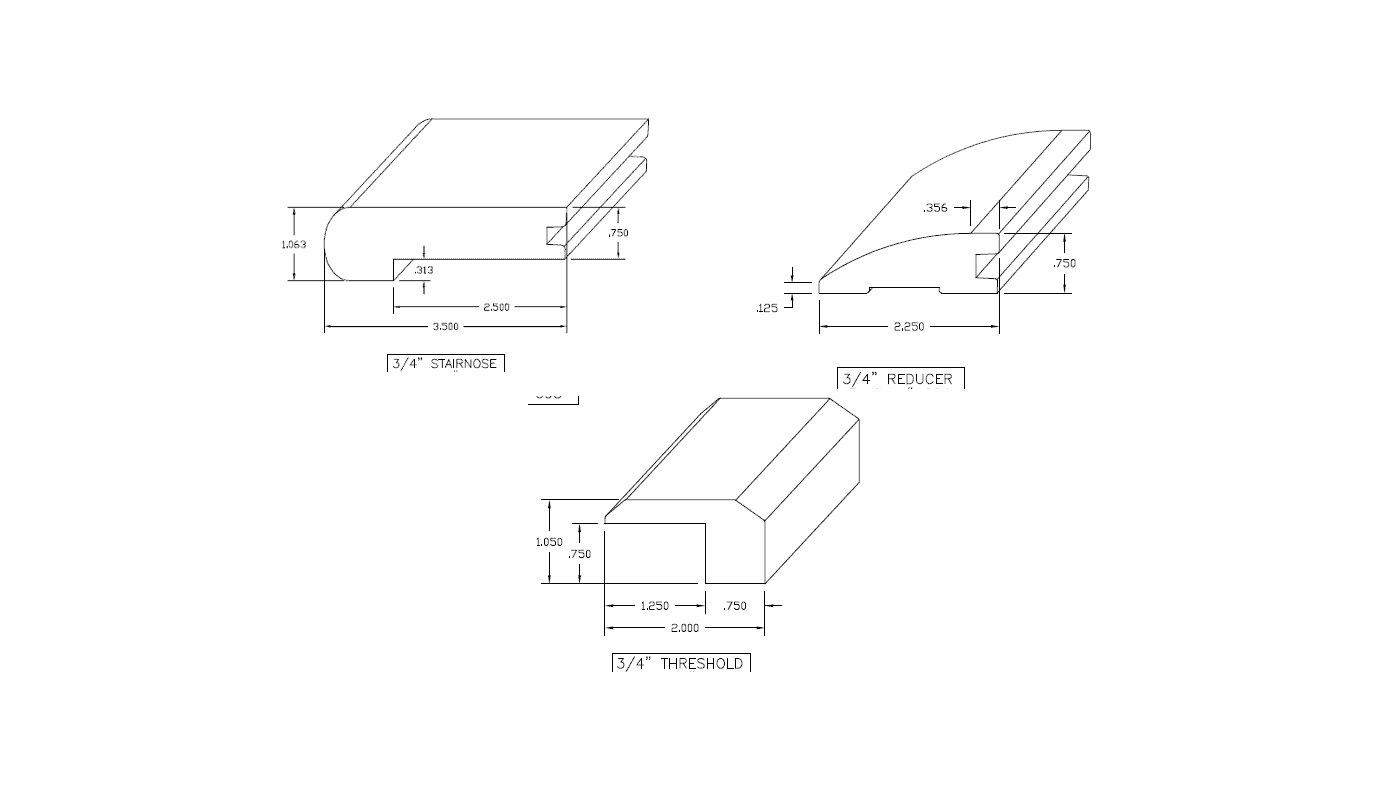
T-Molding
Used where two flooring surfaces of equal height meet. Common in doorways, open transitions, and long hallways.
Reducer Molding
Creates a gradual slope from a higher floor to a lower one. Often used between hard surface flooring and carpet.
End Cap (Threshold)
Finishes exposed edges near exterior doors, sliding glass doors, fireplaces, or floor-to-wall terminations.
Stair Nosing
Protects stair edges, improves safety, and creates a finished look on steps and landings.
Baseboard, Quarter Round, and Shoe Molding
Cover expansion gaps along walls while completing the room visually.
These floor trim options work together as a system, not individual accessories.
How Trim Availability Varies by Flooring Type
Not all trim is interchangeable. Understanding what trim pieces are offered for flooring depends on the product category.
Hardwood & Engineered Hardwood: matching wood species trim, reducers, T-molding, stair nosing
Luxury Vinyl Plank & Tile: color-coordinated trims designed for floating or glue-down installations
Laminate Flooring: decorative trims engineered to match plank visuals
Tile Flooring: metal or PVC edge profiles for clean, durable transitions
Each trim profile is engineered for thickness, movement, and installation method.
Matching Floor Trim: Blend In or Stand Out?
Matching floor trim does not always mean invisible. Depending on design goals, trim can either disappear or become a design element.
Options include:
Exact color-matched trim
Coordinating neutral trim
Metal profiles for modern spaces
Thoughtful matching floor trim elevates the entire installation and prevents transitions from feeling like afterthoughts.
Flooring Transition and Trim in Open-Concept Homes
Open layouts require careful flooring transition and trim planning to avoid visual clutter.
Best practices include:
Aligning transitions with doorways or architectural breaks
Using consistent trim profiles across shared spaces
Avoiding unnecessary transitions when materials match
Strategic trim placement keeps open areas cohesive and intentional.
Planning Trim for Stairs, Hallways, and Elevation Changes
Stairs and elevation changes demand special attention due to safety and building code requirements.
Important considerations:
Stair nosing must match flooring thickness
Landings may require multiple trim types
All exposed edges must be protected
Planning these areas early prevents costly revisions later in the project.
Using the Trim & Accessories Section at Flooring Market
The Trim & Accessories section on each Flooring Market product page shows compatible trim options for that specific floor.
This section allows customers to:
View available matching floor trim
Compare coordinating trim and accessories
Understand trim compatibility before ordering
Final quantities and selections should always be confirmed by the installer based on room layout, subfloor conditions, and installation method.
Installer Insight: Why Trim Selection Affects Floor Longevity
From a professional installer’s standpoint, trim is essential to performance.
Incorrect trim selection can:
Restrict floor movement
Expose vulnerable edges
Cause buckling or separation
This is why flooring transition and trim are treated as part of the flooring system, not an add-on.
Room-by-Room Trim Planning Guide
Different spaces require different trim strategies.
Entryways
End caps or reducers help manage height changes and traffic flow.
Kitchens
Trim should protect edges near appliances and transitions to adjacent rooms.
Living Areas
Consistent trim profiles maintain visual flow.
Bedrooms
Baseboards and shoe molding provide clean wall transitions.
Bathrooms
Metal edge profiles protect tile edges and handle moisture exposure.
Frequently Asked Questions About Flooring Trim
Do all floors require trim?
Yes. Every floor requires trim to manage expansion and finish exposed edges properly.
Can trim be replaced later?
In many cases, yes — but replacement may require partial flooring removal depending on installation type.
Does trim have to match exactly?
No. Coordinating trim often works just as well and can be visually intentional.
Common Mistakes to Avoid When Choosing Trim
Avoid these issues:
Ordering trim without reviewing room layout
Ignoring height differences between flooring types
Forgetting stair edges and landings
Assuming one trim profile works everywhere
Proper planning prevents delays, reorders, and unnecessary costs.
Final Thoughts
Understanding what trim pieces are offered for flooring is essential for a successful installation. Trim protects your floors, supports natural movement, and completes the design of every space.
Whether you are installing hardwood, laminate, luxury vinyl, or tile, selecting the right floor trim options is just as important as the flooring itself. Flooring Market makes it easy to explore matching floor trim and coordinating trim and accessories so your project finishes strong and performs well for years to come.
While we’re always happy to help explain which trim pieces are offered for flooring and how they’re typically used, final trim selection should be confirmed with your installer or contractor. Your contractor can evaluate site conditions, expansion needs, and layout details to ensure the trim you choose is appropriate for the specific installation, since application details can vary and cannot be assessed remotely.
If you need help reviewing trim options or understanding compatibility, the Flooring Market team is always available to assist.
FAQs
How do I know how many trim pieces I need?
Trim quantities depend on the number of doorways, transitions between rooms, stair edges, and exposed flooring edges in your space. Installers typically review the floor plan and measure transitions to determine the correct number of trim pieces before installation begins.
What happens if trim pieces are not installed?
Without proper trim pieces, flooring edges may become exposed to damage, expansion gaps may remain visible, and transitions between surfaces may become unsafe or uneven. Trim helps ensure the installation functions properly and maintains a finished appearance.
Can trim pieces be painted or stained?
Some trim profiles, such as unfinished wood moldings, can be painted or stained to match surrounding baseboards or design elements. However, factory-finished trim designed to match flooring should typically not be altered, as doing so may affect durability or appearance.