Table of Contents
- Why the Cement Grout vs Epoxy Grout Choice Matters
- What Is Cement Grout?
- What Is Epoxy Grout?
- Cement Grout vs Epoxy Grout: Performance Differences
- Appearance and Design Considerations
- Installation Differences to Know
- Cost Comparison: Cement Grout vs Epoxy Grout
- Best Use Cases by Room
- Cement Grout vs Epoxy Grout: Quick Comparison
- Choosing the Right Grout for Your Project
- Final Thoughts from Flooring Market
- FAQs
Cement Grout vs Epoxy Grout: What’s the Difference?
Choosing grout may seem like a small detail in a tile project, but it has a major impact on how your floors and walls perform over time. When homeowners compare cement grout vs epoxy grout, the decision often comes down to durability, maintenance, and how the space will actually be used day to day.
Both options are widely used in residential and commercial tile installations, but they behave very differently once installed. Understanding the strengths and limitations of cement grout and epoxy grout helps you make a confident choice—one that supports both the look and longevity of your tile.
This guide breaks down the differences clearly, without hype, so you can select the best grout for your space.
Why the Cement Grout vs Epoxy Grout Choice Matters
Grout does more than fill joints. It protects tile edges, helps prevent moisture intrusion, and contributes to the finished appearance of your floor or wall. In the cement grout vs epoxy grout conversation, the real question isn’t which one is “better,” but which one fits your lifestyle, location, and expectations.
Bathrooms, kitchens, entryways, and showers all place different demands on grout. Foot traffic, moisture, cleaning habits, and staining potential should guide your decision.
What Is Cement Grout?
Cement grout is the most traditional and commonly used grout type. It’s made from a mixture of cement, minerals, and pigments, and it cures through hydration.
Types of Cement Grout
Sanded cement grout – Used for wider joints, typically 1/8 inch or more
Unsanded cement grout – Used for narrow joints and delicate tile surfaces
Key Characteristics of Cement Grout
Porous by nature
Requires sealing after installation
Available in a wide range of colors
Easier to work with during installation
Cement grout has been used for decades and remains a reliable option when installed and maintained properly.
What Is Epoxy Grout?
Epoxy grout is a more modern, performance-driven grout made from epoxy resins and fillers rather than cement. It cures chemically instead of through hydration.
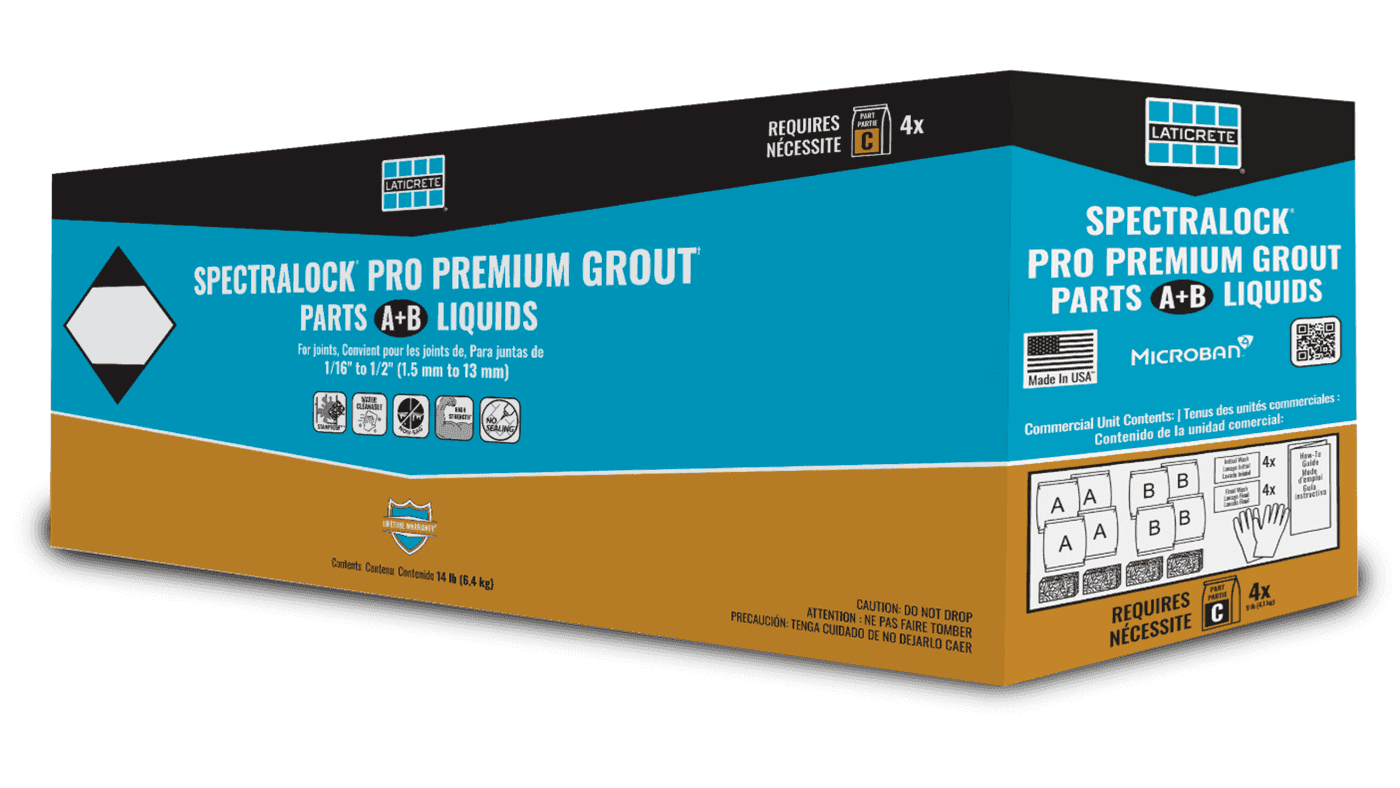
For homeowners and professionals looking for a proven epoxy system, LATICRETE SpectraLOCK Pro Premium Epoxy Grout is a widely used option for both residential and commercial tile installations.
Key Characteristics of Epoxy Grout
Non-porous and highly stain resistant
No sealing required
Extremely durable
More precise installation process
In the cement grout vs epoxy grout comparison, epoxy is often chosen for spaces where moisture, staining, or heavy use are major concerns.
Cement Grout vs Epoxy Grout: Performance Differences
Durability
Cement grout is durable for standard residential use, but it can wear down over time in high-traffic or wet environments.
Epoxy grout is significantly more resistant to cracking, crumbling, and erosion. It maintains its integrity longer, even in demanding spaces.
Verdict: Epoxy grout wins for long-term durability.
Moisture Resistance
Cement grout absorbs moisture unless properly sealed, which can lead to staining or discoloration over time.
Epoxy grout is naturally water resistant and does not absorb moisture, making it ideal for wet areas.
Verdict: Epoxy grout performs better in bathrooms, showers, and kitchens.
Stain Resistance
In the cement grout vs epoxy grout debate, stain resistance is one of the biggest differences.
Cement grout can stain from spills, soap residue, or oils
Epoxy grout resists staining from food, chemicals, and moisture
Verdict: Epoxy grout offers superior stain resistance.
Maintenance Requirements
Cement grout requires:
Regular cleaning
Periodic resealing
More attention in high-use areas
Epoxy grout:
Requires minimal maintenance
Does not need sealing
Cleans easily with mild products
Verdict: Epoxy grout is lower maintenance long-term.
Appearance and Design Considerations
Cement grout offers a traditional matte appearance that many homeowners prefer, especially in classic or rustic designs. Color variation can occur, which some view as character and others as inconsistency.
Epoxy grout provides more uniform color consistency and resists fading. Some modern epoxy formulations now offer softer finishes that better mimic cement grout’s look.
When comparing cement grout vs epoxy grout visually, the difference is often subtle but noticeable in large or well-lit spaces.
Installation Differences to Know
Cement Grout Installation
Forgiving working time
Easier cleanup during install
More flexibility for installers
Epoxy Grout Installation
Shorter working time
Requires precise mixing and cleanup
Best installed by experienced professionals
Improper installation can affect either grout type, but epoxy grout leaves less room for error.
Cost Comparison: Cement Grout vs Epoxy Grout
Cement grout is typically more affordable upfront, both in material cost and installation labor.
Epoxy grout costs more initially due to:
Higher material price
Increased labor time
Specialized installation skills
However, epoxy grout’s lower maintenance needs can offset its upfront cost over time.
Best Use Cases by Room
Kitchens
Cement grout works with sealing and upkeep
Epoxy grout handles spills and stains more easily
Bathrooms & Showers
Cement grout requires careful sealing
Epoxy grout excels in wet environments
Entryways & Mudrooms
Cement grout shows wear faster
Epoxy grout resists dirt and moisture
Backsplashes
Either option works well
Epoxy grout offers easier cleanup
Cement Grout vs Epoxy Grout: Quick Comparison
| Feature | Cement Grout | Epoxy Grout |
|---|---|---|
| Porosity | Porous | Non-porous |
| Sealing Required | Yes | No |
| Stain Resistance | Moderate | Excellent |
| Maintenance | Ongoing | Minimal |
| Installation Difficulty | Easier | More complex |
| Cost | Lower upfront | Higher upfront |
| Longevity | Good | Excellent |
Choosing the Right Grout for Your Project
When deciding between cement grout vs epoxy grout, ask yourself:
Will this area see frequent moisture?
How important is low maintenance?
Is long-term durability a priority?
Do I prefer a traditional or uniform look?
There’s no universal “best” grout—only the best option for your specific space.
Final Thoughts from Flooring Market
The choice between cement grout vs epoxy grout ultimately comes down to how you live and how much maintenance you want to manage over time. Cement grout remains a trusted, cost-effective option for many tile projects, while epoxy grout offers advanced performance for demanding spaces.
At Flooring Market, we carry tile installation materials designed to support both cement grout and epoxy grout applications. Our team is here to help you understand product options, performance expectations, and best-use scenarios—so your tile installation looks great and lasts.
Choosing the right grout is a small decision that makes a big difference. With the right information, you can move forward confidently and enjoy your tile for years to come.
When long-term durability, stain resistance, and moisture protection are priorities, many installers choose epoxy grout systems designed specifically for demanding environments. Products such as LATICRETE SpectraLOCK Pro Premium Epoxy Grout are commonly used in kitchens, showers, and other high-use areas where grout performance matters most. As with any tile installation material, the best choice depends on the tile type, location, and installation conditions, so it’s always wise to confirm compatibility with your installer before moving forward.
Laticrete SPECTRALOCK Pro Premium Epoxy Grout - Full Kit
$135.19
Fast Shipping: This item typically ships the same day if ordered before 2 PM Eastern Time. Bulk quantities may require up to 24-36 hours to process before shipment. New and improved SPECTRALOCK Pro Premium Grout has all the great… read more

FAQs
Does epoxy grout feel different underfoot than cement grout?
In most residential installations, the difference is minimal once the grout has cured. Epoxy grout may feel slightly smoother because it does not absorb moisture like cement grout, but most homeowners will not notice a major texture difference during everyday use.
Does epoxy grout change color over time?
Epoxy grout is generally more color-stable than cement grout. Because it is non-porous and resists staining, it is less likely to darken or discolor from moisture, cleaning products, or everyday spills.
Can existing cement grout be replaced with epoxy grout later?
Yes, in some cases. Old cement grout can be removed and replaced with epoxy grout during a re-grouting project, although the process requires careful removal of the existing grout without damaging the tile edges.