Table of Contents
What Type of Adhesive Should You Use for Your Floor?
Choosing the right flooring adhesive is one of the most important steps in a successful installation. The flooring itself can be top-tier, but if the adhesive isn’t matched to your product, subfloor, and environment, you can run into issues like loose planks, hollow spots, lifting corners, or moisture-related failures. The good news is that once you know what you’re installing—and where—it becomes much easier to pick the right adhesive system.
This guide breaks down the most common adhesive categories, what they’re made for, and the practical questions you should ask before you buy. If you’re unsure, the Flooring Market team can help you match the right products so your install performs the way it should.
Why the Right Adhesive Choice Matters
A quality flooring adhesive does more than “hold the floor down.” It also helps:
Reduce movement and noise (especially in glue-down installs)
Support long-term durability and seam stability
Improve performance over concrete slabs and basements
Limit moisture-related problems when the right system is used
Make repairs easier (or harder) depending on adhesive type
If you’d like to explore options before narrowing things down, you can browse our full selection of flooring adhesive products to compare systems by flooring type and application.
Different flooring materials move differently. Vinyl products behave one way, wood behaves another, and tile is a completely different category. That’s why “one glue fits all” isn’t the approach you want.
Start With the Flooring Type
Before you look at brands or buckets, identify what you’re installing. Most adhesive decisions get easier once you know whether the floor is vinyl, hardwood, or tile/stone.
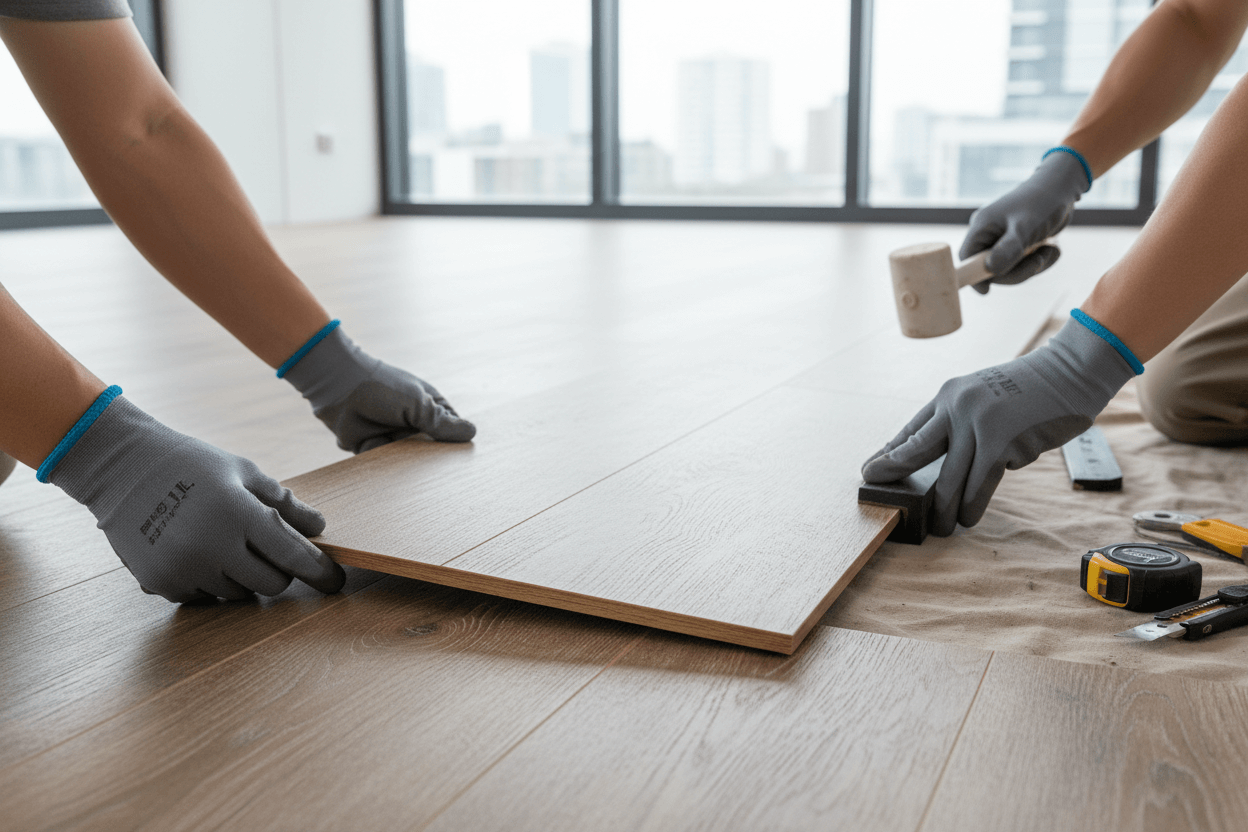
Glue-Down Luxury Vinyl (LVP/LVT)
Glue-down vinyl typically uses either pressure-sensitive or hard-set adhesives depending on the product and traffic level.
Engineered Hardwood (Glue-Down)
Engineered wood often requires urethane or silane-modified adhesives designed for wood movement and stability.
Solid Hardwood
Solid hardwood may be nailed, stapled, or glued depending on subfloor and application. When glue is involved, the adhesive must be designed specifically for wood.
Tile and Stone
Tile uses thinset mortar systems rather than traditional “glue,” and the subfloor prep is just as important as the mortar choice.
Common Floor Adhesive Types in Plain English
1) Pressure-Sensitive Adhesive (Often Used for Vinyl)
Pressure-sensitive adhesives are designed to stay tacky after you spread them. They allow placement adjustments during installation and can make individual plank replacement more realistic later.
This style of flooring adhesive is popular for glue-down LVP and LVT because it balances bond strength with serviceability.
Best for:
Glue-down vinyl plank
Glue-down vinyl tile
Busy spaces where you may want easier repairs
What to know:
Requires correct trowel size and timing (open time matters)
Not ideal for every commercial setting unless specified
2) Hard-Set Adhesive (Permanent Bond)
Hard-set adhesives cure firm and lock the floor into position. These are often used where movement must be minimized and a long-term bond is the priority.
Best for:
Certain glue-down vinyl products (depending on spec)
Some commercial installs
Areas where stability is a top priority
Trade-off:
Repairs can be more difficult because the bond is more permanent
3) Urethane / Silane-Modified Adhesive (Common for Wood)
Wood needs an adhesive that can handle natural movement while still anchoring planks securely. Urethane and silane-modified adhesives are commonly used for glue-down engineered hardwood.
They can also help with sound reduction and “feel” underfoot.
Best for:
Engineered hardwood over plywood or concrete
Wide planks where stability is important
Installs where a premium bond is desired
4) Moisture-Control Adhesive Systems
Moisture is one of the biggest factors in long-term performance, especially over concrete. Some adhesives are formulated to provide moisture resistance, and some systems are paired with moisture mitigation primers.
Choosing the right flooring adhesive for a slab often comes down to moisture conditions, test results, and manufacturer requirements.
Best for:
Basements
Concrete slabs
Humid climates
Areas prone to moisture vapor transmission
Important note:
“Waterproof” flooring does not automatically mean the subfloor is protected
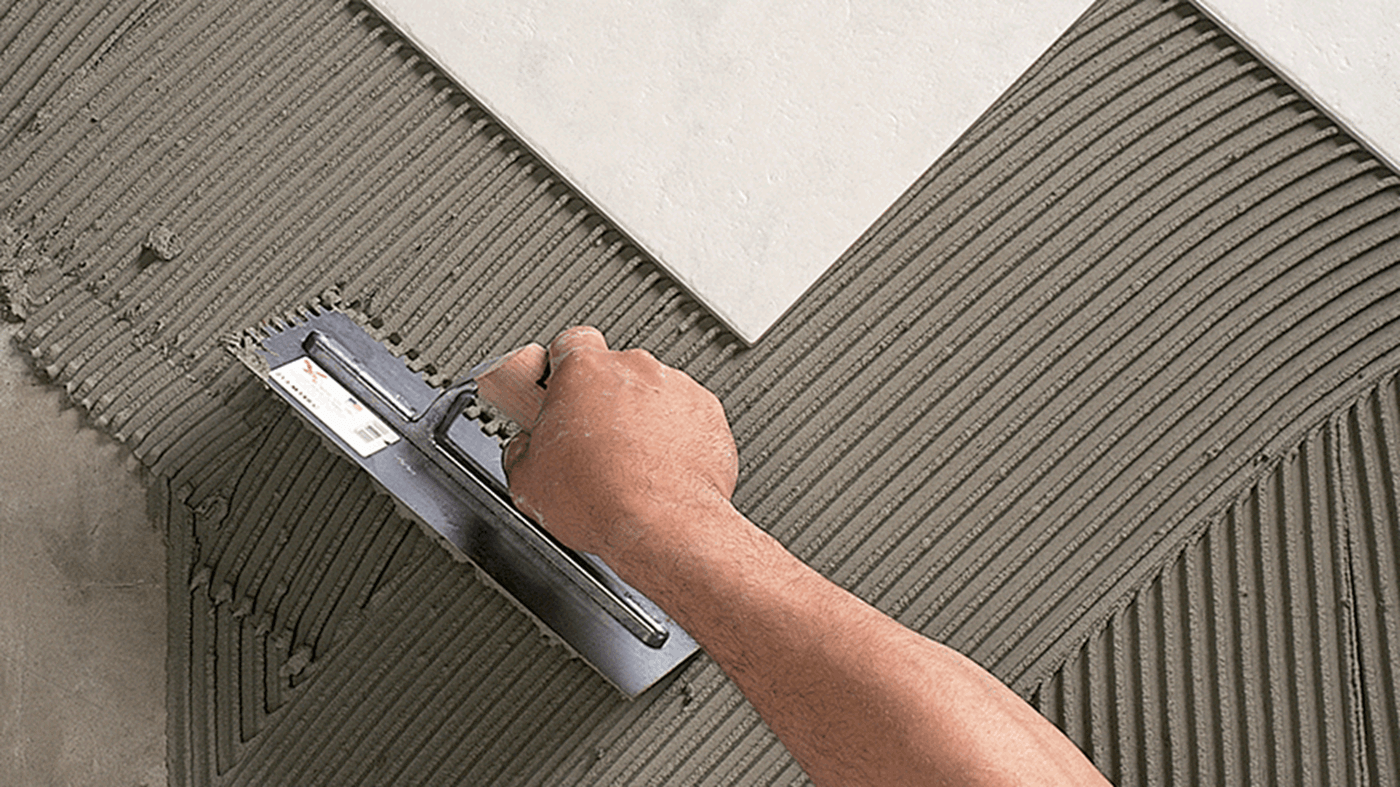
5) Thinset Mortar (Tile and Stone Installations)
Tile installations typically use thinset mortar, not traditional glue. Mortar choice depends on tile type, subfloor, and conditions (wet areas, heated floors, etc.).
Best for:
Ceramic tile
Porcelain tile
Natural stone (with the correct mortar selection)
Also consider:
Membranes, backer board, waterproofing systems, and grout selection
Match Adhesive to the Subfloor
Even the best adhesive can’t fix a subfloor problem. Subfloor type and condition are major deciding factors.
Concrete Slabs
Concrete often requires more attention due to moisture vapor and flatness requirements. If you’re installing over slab, the best flooring adhesive for the job may be one designed for slab use or paired with moisture mitigation steps.
Plywood / OSB
Wood subfloors generally work well with a range of adhesives, but movement, fastening, and flatness still matter—especially for engineered wood.
Existing Floors
Installing over existing surfaces can limit your options. Some adhesives are not approved over certain substrates without prep work.
How Much Adhesive Do You Need?
Coverage depends on:
Trowel notch size
Flooring type
Subfloor porosity
Adhesive thickness requirements
As a general rule, your product spec sheet will list estimated square-foot coverage per bucket. If you’re between amounts, it’s better to have a little extra than to run short mid-install.
Avoid These Common Adhesive Mistakes
A lot of adhesive failures come down to a few avoidable issues:
Using the wrong trowel size (too little or too much spread)
Installing outside the adhesive’s working time window
Skipping moisture testing over concrete
Not acclimating flooring when required
Installing over dusty, dirty, or unprimed substrates
Rolling heavy furniture too soon before full cure
Small details matter because they affect the bond.
Quick Choosing Guide
If you want a simple starting point:
Glue-down vinyl plank → pressure-sensitive or specified vinyl adhesive
Engineered hardwood glue-down → urethane/silane-modified wood adhesive
Tile and stone → thinset mortar matched to tile + subfloor
Concrete slab installs → verify moisture conditions and use an adhesive/system rated for slab performance
And remember: product requirements vary by manufacturer—always follow the spec for your floor.
Flooring Market Tip: Buy Flooring and Adhesive Together
One of the easiest ways to avoid compatibility issues is to purchase your floor and installation materials from the same source. Flooring Market carries adhesives and installation supplies designed to support the flooring products you’re buying, so you’re not guessing at compatibility.
If you tell our team:
the flooring type
the room (kitchen, basement, etc.)
the subfloor (plywood vs concrete)
we can point you toward the correct installation materials.
Final Thoughts
The right flooring adhesive protects your investment and helps your floor look and perform the way it should—especially in busy homes where moisture, traffic, and everyday life put floors to the test. If you’re installing vinyl, engineered hardwood, or tile, choosing the correct adhesive system can make the difference between a smooth install and long-term headaches.
If you’re not sure which flooring adhesive is right for your project, contact Flooring Market. We’ll help you choose a compatible adhesive and installation plan so your flooring performs confidently for years.
FAQs
Can flooring adhesive expire if it sits too long before installation?
Yes. Most flooring adhesives have a shelf life, especially once opened. Temperature fluctuations and long storage periods can affect bonding strength and curing performance. Always check the manufacturer’s expiration date and storage guidelines before using adhesive that has been stored for an extended time.
Do different flooring adhesives have different curing times?
Yes. Cure time varies widely depending on the adhesive type, room conditions, and subfloor. Some pressure-sensitive adhesives allow light foot traffic within a few hours, while urethane and wood adhesives may require 24–48 hours or longer before heavy use or furniture placement
Can temperature affect how flooring adhesive performs during installation?
Yes. Most adhesives have recommended temperature and humidity ranges for proper application and curing. Installing outside those ranges can affect open time, bonding strength, and final performance. Climate-controlled conditions are typically recommended for best results.