Schluter Systems Explained: Kerdi, Ditra, Trims, Heated Floors & Drains
TL;DR Schluter Systems is a German, family-run maker of tile-installation products that tile pros treat as the industry standard. The lineup breaks into five families: profiles (edge trims like Schiene, Jolly and Rondec that protect and finish tile edges), Kerdi (sheet-applied waterproofing for showers and wet walls), Ditra (an uncoupling membrane that goes under floor tile to stop cracks), Ditra-Heat (uncoupling plus electric radiant floor warming), and shower systems (waterproof Kerdi-Board, shower kits, and Kerdi-Drain / Kerdi-Line drains). The single most useful thing to know: Ditra is for floors (uncoupling), Kerdi is for walls and showers (waterproofing) — both are orange, which is why they get confused.
Shop the Schluter Systems Collection →
In this guide
What is Schluter Systems?
Schluter Systems makes the "behind the tile" products — the membranes, trims, drains, and substrates that go in before and around your tile so the finished floor or shower lasts. It isn't a tile brand; it's the system that makes tile installations waterproof, crack-resistant, and cleanly finished. Among tile installers it's close to a default: if a pro is waterproofing a shower or setting a tile floor, there's a good chance one of these products is involved.
The company was founded in 1966 by Werner Schlüter, a German master tile setter who got tired of watching good tile jobs fail at the edges and in wet areas. His first product, the Schiene edge-protection profile, launched in 1975 and solved a simple, universal problem: exposed tile edges chip, so a metal angle set under the tile protects them and gives a clean transition. That mindset — fix the recurring failure points of a tile job — grew into the full catalog you see today. The company is still family-run, headquartered in Iserlohn, Germany, with its largest North American operation in Plattsburgh, New York (established 1989).
The Schluter product families, mapped
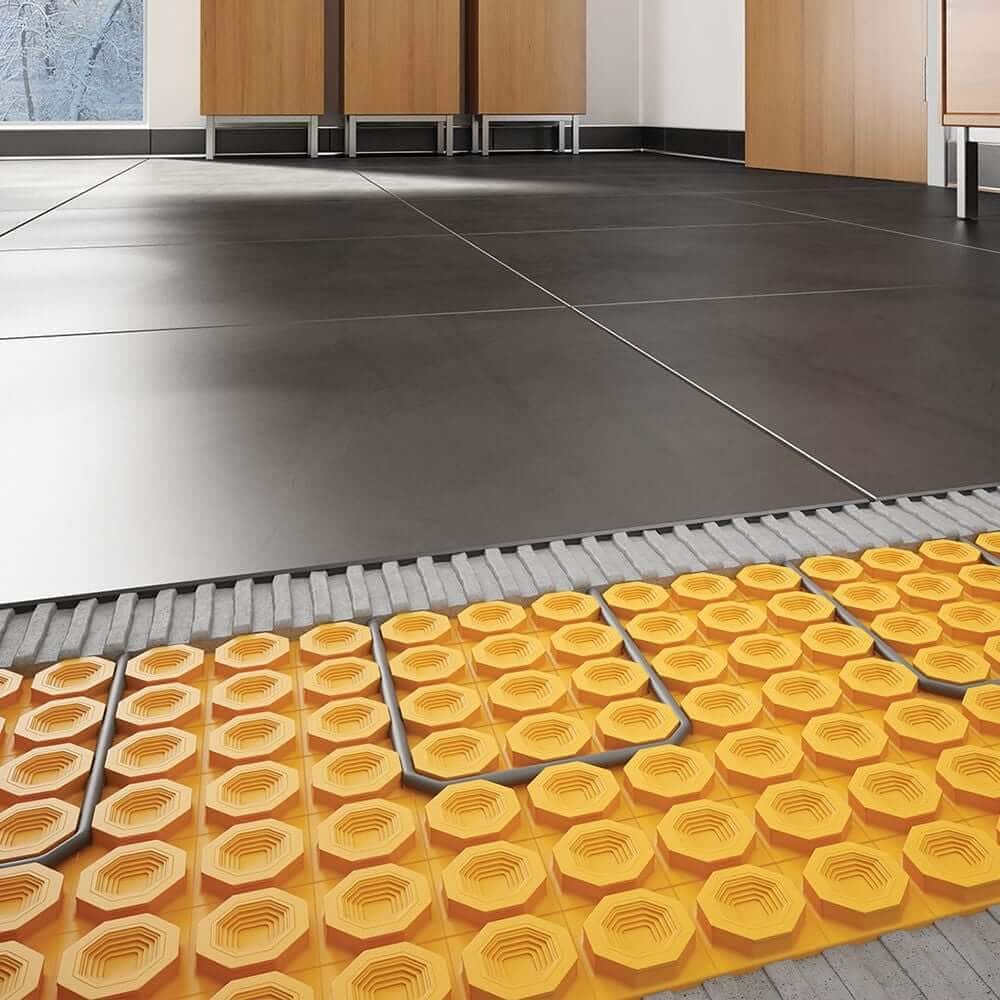
The catalog looks sprawling, but almost everything falls into five groups. Profiles are the metal and PVC trims — Schiene (edge protection), Jolly and Rondec (finished, rounded tile edges), Quadec (a square edge), Dilex (movement joints that let a floor expand without cracking), and Reno (transitions between two floor heights). Kerdi is the waterproofing line: a pliable orange sheet membrane that bonds to the substrate so you can set tile directly over it, plus Kerdi-Board (a waterproof foam building panel) and Kerdi-Band (the strip that seals seams and corners). Ditra is the uncoupling membrane — an orange dimpled sheet that goes under floor tile to absorb subfloor movement. Ditra-Heat is Ditra with electric radiant floor warming built in: a heating cable snaps into the membrane's studs so one layer both uncouples and heats. Shower systems pull it all together — prefabricated sloped shower trays, complete shower kits, and two drain styles: Kerdi-Drain (a center point drain) and Kerdi-Line (a linear/trench drain).
| Family | What it is | Key products | What it's for |
|---|---|---|---|
| Profiles / trims | Metal & PVC edge and joint trims | Schiene, Jolly, Rondec, Quadec, Dilex, Reno | Protecting & finishing tile edges, corners, transitions |
| Kerdi | Sheet-applied waterproofing | Kerdi membrane, Kerdi-Board, Kerdi-Band | Waterproofing showers & wet walls |
| Ditra | Uncoupling membrane | Ditra, Ditra-XL | Preventing cracked floor tile over moving subfloors |
| Ditra-Heat | Uncoupling + electric floor warming | Ditra-Heat membrane, heating cable, thermostat | Warm tile floors that also resist cracking |
| Shower systems | Waterproof shower build-out | Shower trays, shower kits, Kerdi-Drain, Kerdi-Line | Building a fully waterproofed, drained tile shower |
The practical way to think about it: profiles finish the edges, Kerdi waterproofs the walls and shower, Ditra protects the floor, Ditra-Heat is the floor plus warmth, and the shower systems are the drain-and-substrate kit that ties a wet room together.
Ditra vs. Kerdi: uncoupling vs. waterproofing
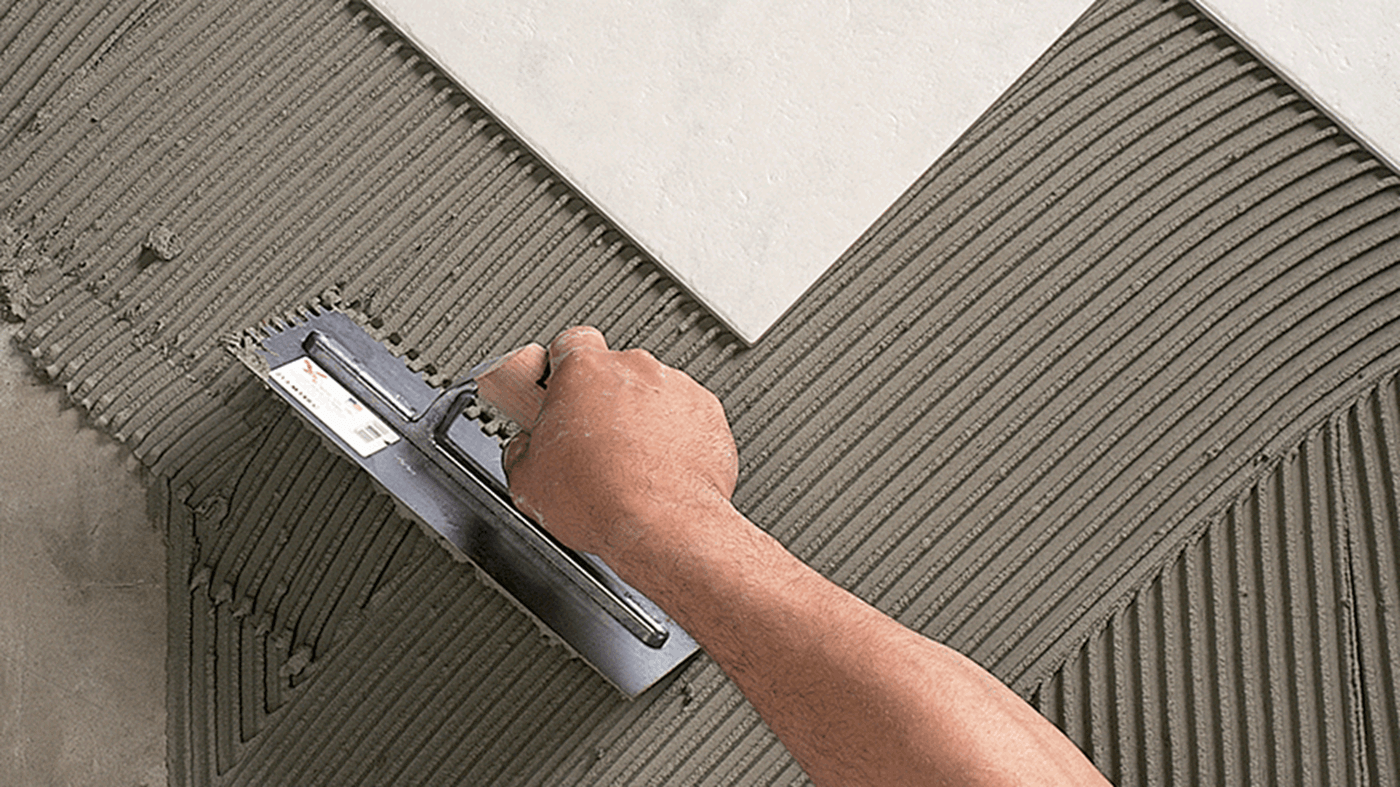
This is the confusion worth clearing up first, because Ditra and Kerdi are both orange fleece-faced membranes and look almost identical on the shelf — but they do different jobs. Ditra is an uncoupling membrane for floors. Launched in 1987, it sits between your subfloor and your tile, and its dimpled structure lets the subfloor move — from moisture, temperature, or normal house settling — without transferring that stress up into the tile, which is what cracks tile and grout. It also manages moisture and provides waterproofing for the floor. Ditra-XL is simply a thicker version for leveling between tile and adjacent wood floors.
Kerdi is a waterproofing membrane, mainly for walls and showers. Developed in the 1980s, it's a sheet you bond to the substrate so tile can go straight over it, creating a continuous waterproof barrier — exactly what a shower wall or a wet room needs. So the rule of thumb: if you're tiling a floor and worried about cracks, that's Ditra; if you're waterproofing a shower or wet wall, that's Kerdi. The two work together constantly — a tiled bathroom might use Kerdi on the shower walls and Ditra on the floor — which is another reason they get mixed up.
Which Schluter product do you need?
Start with the job, not the product. Finishing exposed tile edges — the raw edge of a backsplash, a countertop, or an outside corner — calls for a profile: Jolly or Rondec for a rounded, finished look, Schiene for straight edge protection, Quadec for a crisp square edge. Building or waterproofing a shower is a Kerdi job: Kerdi-Board and membrane for the walls, a prefab shower tray or shower kit for the floor, and a Kerdi-Drain or Kerdi-Line drain. Setting tile on a floor — especially over plywood, a basement slab, or anywhere prone to movement — is where Ditra earns its keep and prevents the cracked-grout callback. Wanting a warm tile floor points to Ditra-Heat, which uncouples and heats in one layer. And transitioning between two floors at different heights, or leaving room for a large floor to expand, is a profile job again (Reno for height changes, Dilex for movement joints).
If you're planning a full bathroom, you'll likely touch several families at once: Kerdi on the shower, a Kerdi drain, Ditra or Ditra-Heat on the floor, and profiles to finish the niche edges and the doorway transition. That's normal — the system is designed to work as a set.
How much it costs & where to buy online
Schluter spans a wide price range because it spans a lot of product types. Profiles and trims are the low end — most edge and transition pieces are inexpensive per piece, priced by length and finish (aluminum costs less than a solid-brass or anodized finish). Membranes are priced by the square foot: Ditra and Kerdi typically land in the low single digits per square foot, and Ditra-Heat costs more per square foot because the membrane is only part of the system. Heated floors and shower builds are the higher-ticket items, because a working Ditra-Heat floor also needs a heating cable and a thermostat, and a shower needs the tray, drain, membrane, and band together — those add up to a kit, not a single part. Flooring Market shows pricing directly on each product page, so you can see the real number for the exact piece and quantity you need rather than guessing from a range.
Ordering online is straightforward: open the collection, pick the category you need, and check the product page for pricing and specs. Shipping is free on orders over $1,500 in the contiguous U.S., we advertise up to 70% off retail store prices, and we'll price-match a lower written quote. If you're not sure which parts add up to a complete job — a common worry with shower and heated-floor systems, where a missing piece stalls the install — pull a free Instant Quote or chat with our flooring experts and we'll help you build the full parts list before you order.
Frequently asked questions
What is Schluter used for?
Schluter makes the products that go in before and around tile so an installation lasts — waterproofing membranes, uncoupling membranes, heated-floor systems, drains, and edge trims. It isn't a tile brand; it's the system underneath and around the tile. Tile pros rely on it because each product solves a specific way tile jobs fail.
What's the difference between Ditra and Kerdi?
Both are orange membranes, but they do different jobs. Ditra is an uncoupling membrane that goes under floor tile to prevent cracking (and it waterproofs the floor). Kerdi is a waterproofing membrane for shower walls and wet areas. Simple rule: Ditra for floors, Kerdi for walls and showers.
Is Schluter Ditra waterproof?
Yes — besides uncoupling the floor, Ditra provides waterproofing and manages moisture in the assembly. But it's built as a floor membrane; for shower and wet-area walls, Kerdi is the product designed for that job.
What is Ditra-Heat?
Ditra-Heat is electric radiant floor warming built into an uncoupling membrane — a heating cable snaps into the membrane so one layer both warms the floor and prevents cracks. A complete system needs three parts: the membrane, a heating cable sized to your floor, and a thermostat.
Where can you buy Schluter Systems online?
Flooring Market carries the full line — profiles, Kerdi, Ditra, Ditra-Heat, Kerdi-Board, shower pans, and drains — with pricing on each product page. Shipping is free over $1,500, we advertise up to 70% off retail, and we price-match written quotes. Not sure which parts you need? Pull a free Instant Quote or chat with a flooring expert.